You came home from surgery with a dressing, a folder of instructions, and one line that keeps nagging at you: "keep the incision dry." Then day two or three arrives, you feel grimy, and you want a real shower.
The worry is reasonable. A soaked dressing can loosen, hold moisture against healing skin, and need to be changed before your next scheduled visit. The good news is that "keep it dry" and "take a shower" are not always in conflict. With your surgeon's okay and a bit of setup, most people can wash while the dressing stays dry.
Quick answer: First ask your surgeon when you may shower and whether the dressing must stay dry. If showering is allowed, seal a clear, impermeable barrier over the intact dressing so its adhesive border sticks to clean, dry skin around it, keep the shower short with the spray aimed away from the site, and never soak in a bath. Remove the cover right after, and call your team if the dressing gets wet.
When can you shower after surgery?
There is no single rule. It depends on the type of surgery, how the incision was closed (stitches, staples, skin glue or adhesive strips), and what dressing was used. Some surgeons let patients shower within a day or two. Others want the site kept completely dry until a follow-up visit or until the stitches come out.
If your discharge papers are vague, call the office and ask three specific questions:
- When may I take my first shower?
- Does the dressing need to stay dry, or can water run over it?
- If the dressing gets wet, should I change it myself or come in?
Write the answers down. They override anything you read online, including this article.
Why does the dressing need to stay dry?
A fresh incision is still sealing. Your sterile dressing is there to protect it, absorb drainage and keep the area clean. Once that dressing is soaked, it stops doing its job well: the edges lift, the pad holds damp material against the skin, and tap water can wick underneath. That is why most surgical teams treat a wet dressing as one that needs attention, not one to let air dry.
What not to do
- Don't soak. No baths, hot tubs or swimming with a fresh incision unless your surgeon has cleared it. Even a good shower cover is not made to be under water.
- Don't take the sterile dressing off to put a cover on. The cover goes over the dressing, not in place of it.
- Don't rely on kitchen plastic wrap and tape. It wrinkles, water channels through the folds, and the tape often fails once it is wet. We explain why in why plastic wrap fails as a shower cover.
- Don't put lotion, oil or cream near the site before a shower. Anything on the skin keeps an adhesive border from sticking.
How to cover an incision for a shower, step by step
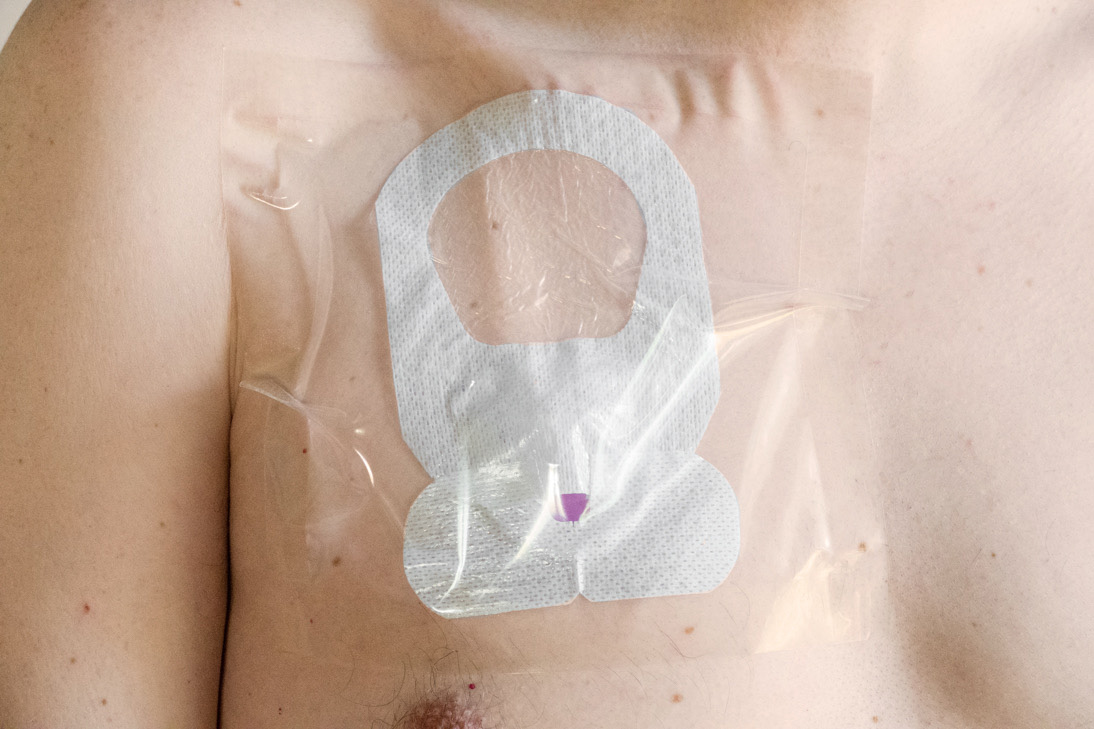
A purpose-made barrier like the HydroSeal Protective Barrier is a clear, impermeable film with an adhesive border. It goes over your dressing so water runs off instead of soaking in, and because it is clear you can still see the site. Here is how to use one:
- Get everything ready first. Towel, clean clothes, soap and the barrier within reach. Set the water temperature before you step in.
- Check the skin around the dressing. It should be clean and completely dry, with no lotion. Shaving the area is not recommended.
- Pick a size that clears the dressing on every side. You want about an inch of bare skin around the dressing for the adhesive to grip. The barrier comes in 5"x5", 7"x7", 9"x9" and 10"x12". See the HydroSeal size guide if you are unsure.
- Peel the top tab liner and place the top edge first, about an inch above the dressing. Press it down.
- Let the film fall over the dressing, then peel the bottom liner and press the bottom edge about an inch below the dressing.
- Remove the two side liners and smooth the sides down. Run a finger around the whole border so there are no gaps or creases.
- Don't lift and re-stick it. Repositioning weakens the seal. If it went on badly, use a new one.
- Shower briefly. Turn the covered area away from the spray, and use lukewarm water. Long, hot showers loosen any adhesive faster.
- Dry the outside of the barrier with a towel before removing it, so water on the film does not drip onto the dressing.
- Peel slowly from one corner, holding the skin with your other hand. Throw it away; each barrier is single use.
Our older post on how to cover an IV for a shower walks through the same tab system, if you want a second explanation.
Which cover fits which incision?
Size is the decision that matters most. A barrier that is too small ends up with its border on the dressing itself, and it will not seal there.
| Incision or dressing | Often a good fit |
|---|---|
| Small laparoscopic port sites, a single small dressing | 5"x5" or 7"x7" |
| Medium abdominal or hip dressing | 7"x7" or 9"x9" |
| Long abdominal, sternal or back dressing | 10"x12" |
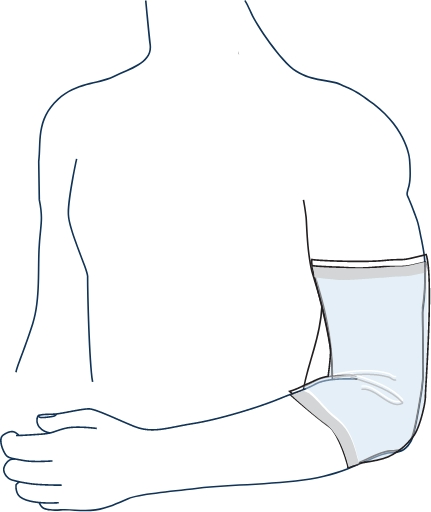
| Site near a joint that bends, such as the elbow or upper arm | HydroSeal Flex (7"x9") |
HydroSeal Flex uses a stretchier film so it moves with you instead of pulling at the edges when a joint bends. Apply it with the 7" side running horizontally and the 9" side vertically. For a whole arm or leg, a full sleeve or boot cover is often easier than a flat barrier.
Specific surgeries come with their own challenges. We have separate guides for showering after knee replacement, shoulder, heart and spine surgery.
Make the shower itself safer
Right after surgery you may be tired, sore, on pain medicine, or less steady than usual. A slip in the shower is a real risk.
- Use a shower chair or bench, at least for the first few showers.
- Put down a non-slip mat inside and outside the tub.
- Hold a grab bar, not a towel rack.
- A handheld shower head lets you rinse without turning toward the spray.
- Ask someone to be home and within earshot for the first one.
Call your care team if...
- The dressing got wet or started peeling away.
- The incision is more red, swollen, warm or painful than the day before.
- You see new or increased drainage, pus, or a bad smell.
- The edges of the incision have opened.
- You have a fever or chills.
- The skin under the barrier's border is itchy, blistered or irritated. Stop using it until you have talked with your team.
Frequently asked questions
Can I let soapy water run over the incision once the dressing is off?
Many surgeons allow that once the dressing is removed and the incision is closed, but some do not. This is exactly the kind of question to ask at your follow-up. Until you have a clear yes, keep the site covered and out of the spray.
What if my dressing gets a little damp anyway?
Don't leave it on to dry. Follow whatever your team told you: some patients are taught to change it themselves, others need a nurse to do it. If you were not told, call the office.
Is a shower cover the same as a waterproof bandage?
No. A barrier like HydroSeal is a non-sterile moisture shield that sits over your sterile dressing during a shower or sponge bath. It does not replace the dressing, and it is not made for being under water.
Can I reuse the barrier for my next shower?
No. Once the adhesive has been peeled off, it will not seal reliably again. Use a fresh one each time.