Maybe the surgeon said no showers yet. Maybe your mom is too weak to stand, or the bathroom is up a flight of stairs she cannot manage. So you are washing her at the bedside or the sink, and you keep glancing at that PICC or central line dressing, worried a drip of water will run underneath it.
That worry makes sense. A sponge bath feels gentler than a shower, but water still runs down an arm, soaks into a washcloth pressed too close, or pools under the chest. With some preparation, you can get the person clean and keep the dressing dry.
Quick answer: Before you start, cover the intact dressing with a clear waterproof barrier, or at least keep a dry towel tucked around it. Wash from the cleanest areas to the dirtiest, keep the washcloth well wrung out, and wash the line arm last, moving water away from the dressing. Never wipe over the dressing itself, and call the care team if it gets wet.
Is a sponge bath safe with a PICC or central line?
Usually, yes. Bed baths and sink washes are a normal part of caring for someone with a central line. The rules are the same as for showering: keep the dressing dry and never put the line under water. That means no tub baths, and no soaking the arm or chest in a basin.
Ask the person's nurse or infusion team before the first bath. They can tell you if there are any limits, how often the dressing is changed, and who to call if it gets wet.
What you will need
- Two basins or bowls: one with warm soapy water, one with clean rinse water (or a no-rinse cleanser, if the team recommends one)
- Several soft washcloths and two or three towels
- A waterproof pad or extra towel to protect the bed
- A clear barrier to cover the dressing
- Clean clothes and anything else they need, laid out within reach
- Disposable gloves, if you use them for personal care
Warm the room first. People who are ill chill quickly, and shivering makes everything harder.
Cover the dressing before you start
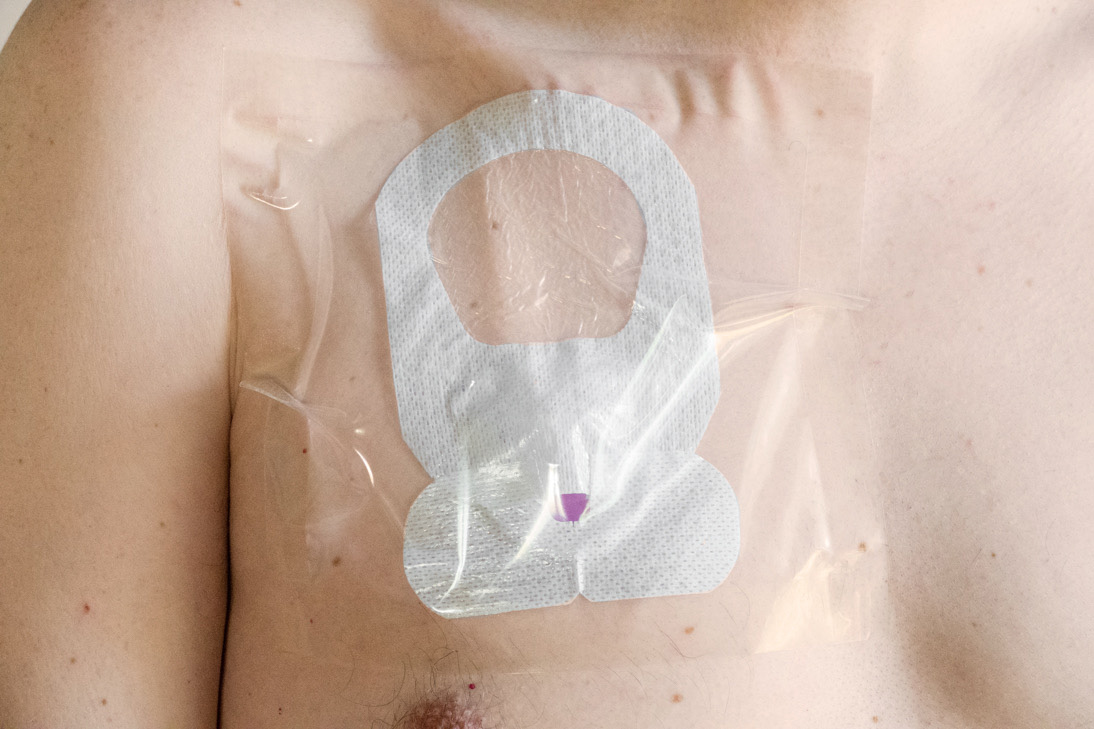
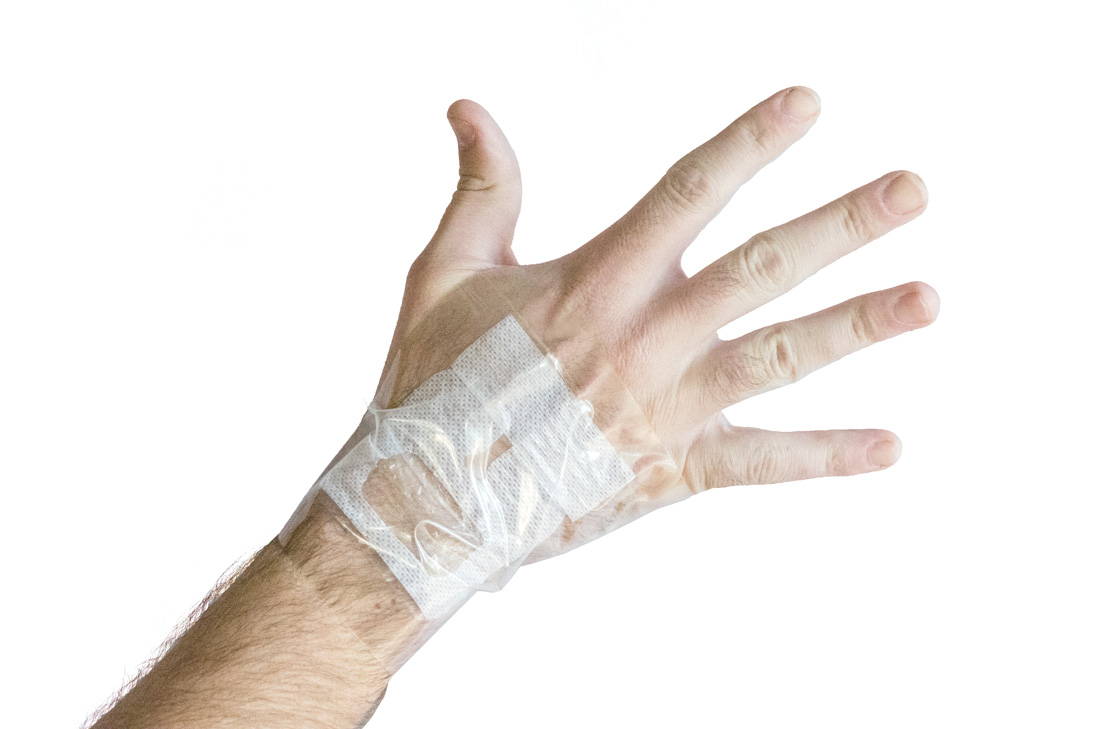
A clear barrier sealed over the dressing gives you room for mistakes. If water drips, it runs off the film instead of soaking in at the edges.
HydroSeal Protective Barrier is a clear, impermeable film with an adhesive border, intended for keeping vascular access sites and dressings dry during sponge bathing as well as showering. Because it is clear, you can still see the site. It comes in 5"x5", 7"x7", 9"x9" and 10"x12". Choose a size that covers the dressing with about an inch of clean skin all around.
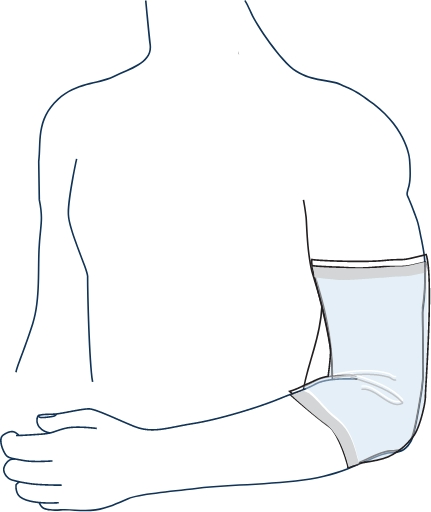
For a PICC on the upper arm, HydroSeal Flex is often the easier fit. It is a 7"x9" barrier with a stretchable film, made because a 9"x9" placed over an upper-arm PICC tends to wrap all the way around and stick to itself. The Flex reaches above the insertion site without that overwrap. Apply it with the 7" side running across the arm and the 9" side running up and down.
Applying the barrier
- Wash and dry your hands. Make sure the skin around the dressing is clean and fully dry, with no lotion.
- Leave the sterile dressing in place. The barrier goes over it.
- Peel the top liner and press that edge onto skin about an inch above the dressing.
- Peel the bottom liner and smooth the film down to skin about an inch below.
- Peel the two side tabs and press the side edges down.
- Run your fingers around the whole border so it is sealed. The adhesive should touch skin only, never the dressing.
Once it is on, do not lift and re-stick it. Each barrier is single use.
Step by step: a bed bath with a central line
- Explain what you are doing. Even a tired or confused person relaxes when they know what comes next.
- Position them. Raise the bed to a comfortable working height if you can, and lay a towel or pad underneath.
- Uncover one area at a time. Keep the rest covered with a towel for warmth and privacy.
- Face first. Use plain water for the eyes, wiping from the inner corner out, then wash the face, neck and ears.
- The arm without the line. Wash, rinse and pat dry, then cover it again.
- Chest and belly. If the line is in the chest, wash around it in strokes that move away from the dressing. Keep a folded dry towel along the edge of the barrier to catch drips.
- Legs and feet. Change the water if it has cooled or gets dirty.
- Back. Roll them gently onto the side away from the line, wash and dry, then roll back. Watch that the tubing is not trapped underneath.
- The line arm last. Hold the arm with the hand lower than the dressing so water runs away from it toward the fingers. Use a well-wrung cloth and skip the area under the barrier.
- Private areas. Use a fresh cloth and clean water, front to back.
- Dry thoroughly, especially skin folds, then dress them, PICC arm into the sleeve first.
Washing at the sink
If they can sit at the sink, put a sturdy chair there and keep the line arm resting on a dry towel on the counter. Wash the body in sections as above. For a quick wash between full baths, a no-rinse cleanser on a damp cloth keeps water to a minimum.
Washing hair without a shower
Hair is where splashing happens most. Options include a rinse-free shampoo cap, an inflatable bed basin, or leaning back at the kitchen sink with a towel draped over the shoulder and chest. Cover the dressing first and keep the line side angled up and away from the water. For a neck or chest line, ask the team before washing hair over a sink.
After the bath: removing the barrier
- Pat the outside of the barrier completely dry with a towel.
- Loosen one corner and peel slowly, low and close to the skin.
- Look at the dressing. It should be dry and still sealed at the edges.
- Throw the barrier away. Use a new one next time.
If the dressing is damp, do not leave it on. Read what to do if your PICC dressing got wet and call the care team to have it changed. When the person is cleared to shower again, our guide on how to shower with a PICC line picks up from here.
Call your care team if...
- The dressing is wet, loose, or peeling at the edges.
- You see redness, swelling, warmth, drainage or bleeding at the site.
- The person has a fever, chills, or seems more confused than usual.
- The arm, shoulder or neck on the line side is swollen or painful.
- The external tubing looks longer than before.
Stop using the barrier if the skin under the adhesive becomes red, itchy or irritated, and let the team know.
Frequently asked questions
How often should someone with a central line get a sponge bath?
Ask the care team. Many people do a full wash daily or every other day, with quick washes of the face, hands and private areas in between.
Can I use baby wipes instead of water?
Wipes and no-rinse cleansers are handy for spot cleaning. Keep them away from the dressing, and ask the team about anything with fragrance or alcohol on sensitive skin.
Do I need a barrier for a sponge bath, or is a towel enough?
A towel can work with very careful washing, but it soaks up drips and can wick water toward the dressing. A sealed barrier gives you a margin for error.
Can I put lotion on after the bath?
Yes, on skin away from the dressing. Keep lotion off the area where the next barrier or dressing will need to stick.