If you are living with a diabetic foot ulcer, or healing from foot or ankle surgery, you have probably been told the dressing has to stay dry. That is easy to say and hard to do when the wound is on the part of your body that sits in the bottom of the shower, right where all the water collects.
This guide is for patients and caregivers who want to wash safely without setting healing back. It covers what to ask your wound care team, how to cover the foot, and how to stay steady while you do it.
Quick answer: Ask your wound care team whether showering is allowed. If it is, cover the whole foot and lower leg with a waterproof leg cover that seals well above the ankle, sit on a shower chair, keep the foot out of the water pooling on the floor, and test the water temperature with your hand, not your foot. If the dressing gets wet, contact your team about changing it.
Why foot wounds are harder to keep dry
An arm can be held up out of the spray. A foot cannot. Water runs down your body and collects around your feet, so a short cover that stops at the ankle is sitting in a puddle the whole time. That is why the cover needs to reach well up the leg and seal there, far from where the water pools.
A wet dressing on a foot wound is a real problem. Moisture can soften the skin around the wound, loosen the dressing, and break the barrier your team put in place. For someone with diabetes or poor circulation, a small setback can take weeks to recover from. If your dressing gets wet, do not leave it on. Follow your team's instructions for changing it, or call them.
Ask your wound care team first
Wound care plans vary a lot. Before your first shower, ask:
- Am I allowed to shower, or should I sponge bathe for now?
- Can I stand or put weight on this foot, or do I need to stay off it? Many people with foot ulcers wear offloading boots or casts for a reason.
- If my dressing gets wet, can I change it myself, or do I need to come in?
- Is there any part of my dressing or device that must never be covered or squeezed?
After foot surgery, your surgeon may say no showering for a set number of days. Follow that, even if the foot feels fine.
Neuropathy changes the rules
Many people with diabetic foot ulcers have peripheral neuropathy, which means reduced feeling in the feet. That matters in the shower in two ways.
You may not feel water that is too hot. Always check the water temperature with your hand or elbow before it touches any part of your body, and keep it warm, not hot. Burns on numb feet are a known risk.
You may not feel that the dressing is wet. You cannot rely on a damp, cold feeling to warn you. Check the dressing with your eyes and hands after every shower.
Neuropathy can also affect balance, which brings us to the most important part of the setup.
Stay steady: sit down to shower
A wet floor, one foot in a cover and reduced feeling in your feet is a combination that leads to falls. A few changes help a lot:
- A shower chair or tub transfer bench so you wash sitting down.
- A handheld shower head so you can control where the water goes.
- Grab bars fixed to the wall and a non-slip mat inside and outside the shower.
- Someone nearby for the first few showers.
If you are wearing an offloading boot or have been told not to bear weight, do not stand on the covered foot. A shower cover is not footwear and is not a substitute for your boot.
How to cover a foot wound dressing for the shower
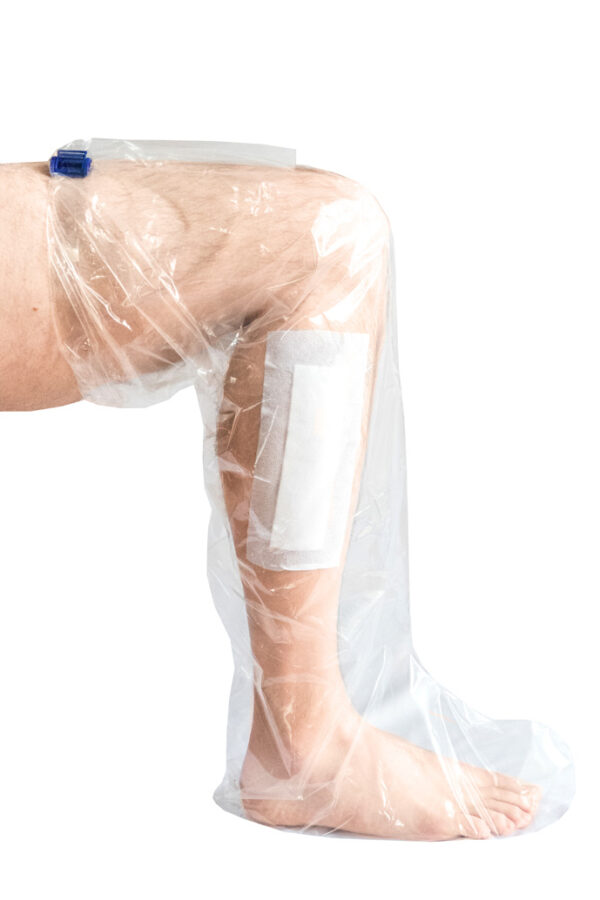
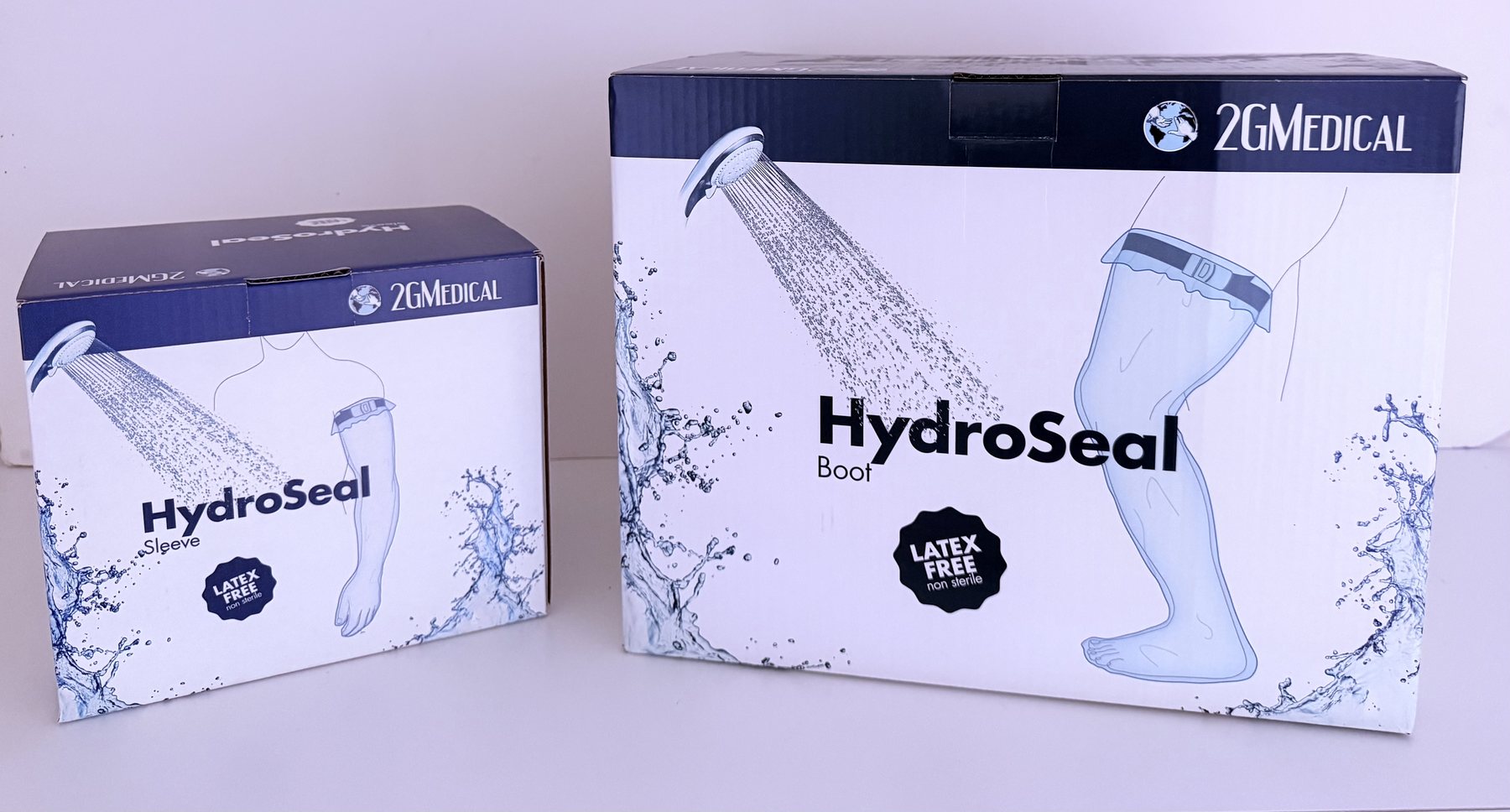
A cover that only reaches the ankle sits in pooled water. You want one that goes well up the leg. The HydroSeal Boot is a full-leg cover that closes at the top with a push-button release buckle strap. The film is textured with patient safety in mind, and it is made to cover any foot or leg site, including over a cast. It is latex-free and single use.
- Sit down in a dry spot to put the cover on.
- Check the dressing is intact, dry and secure before you start.
- Slide the Boot over the foot gently, taking care not to drag across the dressing or bump the wound.
- Smooth it up the leg so the top sits well above the ankle and calf.
- Fasten the strap snugly with no gaps, but never tight. With poor circulation, a tight band on the leg is a risk. You should be able to slide a finger under it.
- Shower seated, with the covered foot raised on a low stool or held away from water pooling on the floor if you can do that safely.
- Towel the cover dry before you release the buckle, so drips do not run onto the dressing.
- Remove the cover sitting down, then inspect the dressing.
After the shower: check both feet
Once you are dry and dressed, it is a good moment to look at both feet, since many people with diabetes are told to check their feet daily. Use a mirror or ask someone to help. Look at the dressing on the wounded foot, and check the other foot too: between the toes, the heel and the sole. Dry carefully between the toes. Do not put lotion between the toes, and do not put lotion near the wound unless your team told you to.
Call your care team if...
- The dressing is wet, loose or has slipped.
- There is new or increased drainage, or a bad smell.
- The skin around the wound is redder, warmer or more swollen than before.
- The foot has turned pale, dark or blue, or feels cold.
- You have a fever, chills or feel generally unwell.
- You notice a new blister, cut or sore on either foot.
When a sponge bath is the better choice
If your team has not cleared you for showering, or if getting in and out of the shower feels unsafe, a sponge bath is a good option. Sit at the sink with the wounded foot propped up and away from the water. Wash in sections and dry each one as you go. Many people use sponge baths on most days and shower only when someone is home to help.
If the wound is on the knee or shin after surgery rather than the foot, see showering after knee replacement. If you have a cast instead of a dressing, our leg cast guide covers that setup.
Frequently asked questions
Can I soak my foot if the wound is healing well?
Not unless your wound care team specifically tells you to. Soaking a foot wound is generally discouraged, and diabetic foot care guidance usually advises against foot soaks. No shower cover is meant for submersion.
Can I use a short cast bag that only covers the foot?
Short covers end near the ankle, which is right where water pools. A cover that seals higher up the leg is far less likely to let water in.
My wound is on the heel. Is that harder to protect?
Heels take pressure when you sit or stand, so be careful not to rest your weight on the heel in the shower. Ask your team how they want you to position the foot.
Is a total contact cast different?
Yes. A total contact cast is a specialized offloading cast. Ask the team that applied it what is allowed. Many say to keep it completely dry and not to bear weight beyond what they instructed.