After a discectomy, laminectomy or spinal fusion, your incision is in the one place you cannot see, and the movements you would normally use to reach it (bending, twisting, reaching behind) are exactly what your surgeon told you to avoid. So how do you keep a back dressing dry in the shower when you cannot even look at it?
The answer is mostly preparation and, ideally, a second pair of hands. Here is a practical way to get through the first weeks of showers without wetting the dressing or straining your back.
Quick answer: Confirm with your spine surgeon when you may shower and whether the dressing must stay dry. If it must, have a helper seal a large clear barrier, usually 10"x12", over the intact back dressing so the adhesive grips dry skin around it. Stand or sit facing the spray so water hits your front, keep it short, and do not bend, twist or soak in a bath.
When can you shower after back surgery?
Instructions differ a lot between surgeons and procedures. A small microdiscectomy incision closed with glue may be allowed to get briefly wet within a few days. A longer fusion incision with a bulky dressing may need to stay completely dry until a follow-up visit. Some patients go home with a drain and are told to sponge bathe until it is out.
Ask your team directly: "When can I shower, does my dressing need to stay dry, and who changes it if it gets wet?" Also ask whether you should wear your back brace in the shower. Some surgeons want it on at all times, some allow it off while seated, and some have a separate shower brace.
The spine precautions that matter in the bathroom
Most spine surgery patients are taught some version of "no BLT": no Bending, Lifting or Twisting. Your own list may be different, so follow it. In the shower, that rules out a lot of habits:
- Bending forward to wash your feet or shave your legs.
- Twisting around to rinse your back or reach a shelf behind you.
- Reaching down to pick up a dropped bottle.
- Stepping high over a tub wall while holding your trunk stiff.
Set up the bathroom
- Shower chair or tub transfer bench if standing is tiring or your balance is off. Sit tall; do not slump forward.
- Handheld shower head mounted at a height you can reach without stretching.
- Long-handled sponge for your legs and feet.
- Toiletries on a shelf between waist and shoulder height, in pump bottles, so nothing requires bending or two hands to open.
- Non-slip mat and anchored grab bars. A fall is the last thing a fresh fusion needs.
- A towel and robe within reach of where you will sit to dry off.
Covering a back dressing: why a helper makes it work
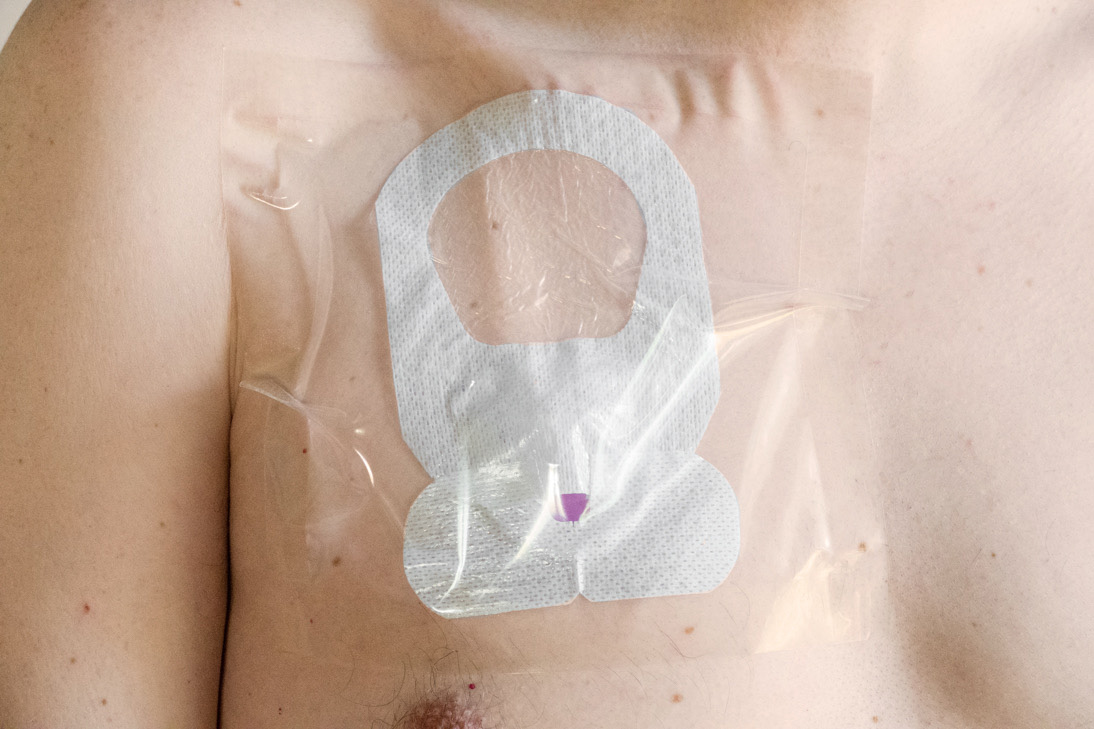
A good seal depends on placing the adhesive border on clean, dry skin about an inch beyond the dressing on every side. On your back you cannot see the edges, and trying to reach them breaks your precautions. A helper can do it in a minute and check the seal properly.
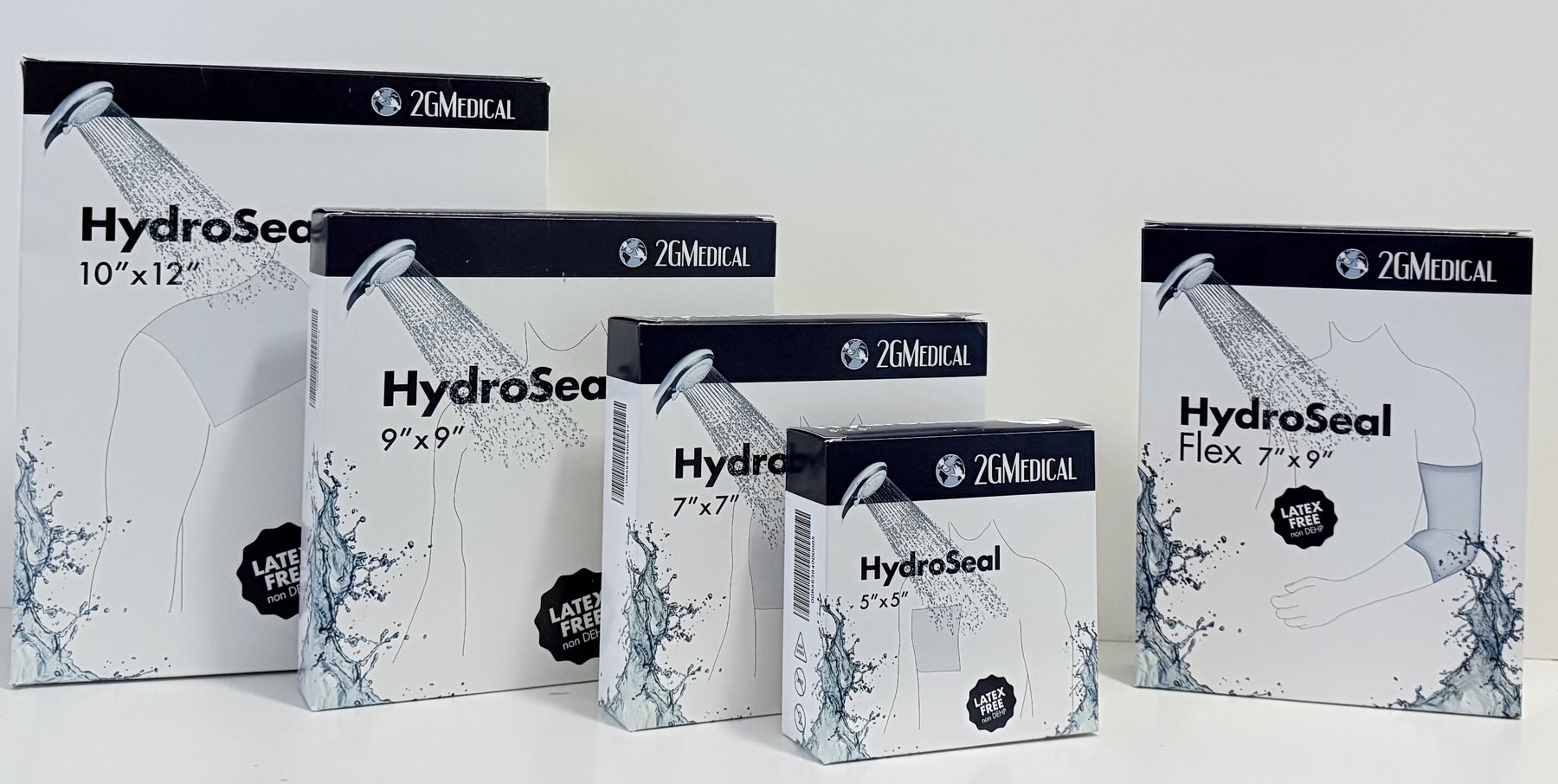
Spine dressings tend to be long and narrow, running along the midline. The 10"x12" HydroSeal Protective Barrier covers most of them with room to spare. A smaller incision, such as from a single-level microdiscectomy, may only need a 7"x7" or 9"x9". If you are not sure, the HydroSeal size guide explains how to measure. The film is clear, so your helper can confirm the dressing is still dry when you are done.
Instructions for the helper
- Have the patient stand or sit upright, holding a counter or a walker for balance, spine straight. Do not ask them to lean forward to "open up" the back.
- Look at the skin around the dressing. It should be clean, completely dry and free of lotion or sweat. Do not shave the area.
- Turn the barrier long-side vertical to match the incision.
- Peel the top tab liner and press the top edge onto skin about an inch above the dressing.
- Let the film settle down the back over the dressing without stretching it.
- Peel the bottom liner and press the bottom edge about an inch below the dressing. On a low lumbar incision, make sure this edge sits on smooth skin above the buttock crease, not in it.
- Peel the side liners and press the sides flat. Run a fingertip all the way around the border, especially along the dip of the spine where gaps form.
- Do not lift and reapply. If it went on crooked or wrinkled over the edge, use a fresh one.
If you have to do it alone
It is possible but tricky. Stand with your back to a large mirror and hold a hand mirror in front of you. Use the largest size so small misplacement still covers the dressing. Do not twist to reach; if you cannot place the edges with your arms at a comfortable height, wait for help or ask your team about a sponge bath for now. Our guide to keeping a surgical incision dry in the shower has more general tips.
During and after the shower
- Face the water. Let the spray hit your chest and front, so your back stays out of the direct stream.
- Use lukewarm water and keep it to a few minutes. Heat and steam loosen adhesive and can make you lightheaded on pain medicine.
- Wash your lower legs and feet with the long-handled sponge instead of bending.
- Before removing the barrier, towel the outside dry. Then your helper peels it slowly from a top corner downward, holding the skin flat. Each barrier is single use.
- Have your helper check the dressing. If any part is wet, follow your instructions for changing it or call the office. Do not leave a damp dressing on.
Call your care team if...
- The back dressing gets wet or comes loose.
- You or your helper see redness spreading, new or increasing drainage, clear watery fluid, or the incision edges separating.
- You have a fever, chills, or a severe headache that worsens when you sit or stand.
- You have new numbness, weakness in your legs, or trouble controlling your bladder or bowels. Get emergency care for these.
- You fall in the shower or bathroom.
- The skin under the barrier's border becomes red, itchy or blistered. Stop using it and tell your team.
Frequently asked questions
Can I sit on a shower chair after spinal fusion?
Usually yes, and many therapists recommend it early on. Sit upright with your feet flat and avoid slouching. Ask your surgeon or physical therapist how long you may sit at a time.
Do I wear my back brace in the shower?
Ask your surgeon. Some want it on, some allow it off while you sit still, and some prescribe a separate brace for showering. A wet brace can also hold moisture against the dressing, so dry everything well before putting a brace back on.
How do I wash my back without twisting?
You mostly don't, at first. Let soapy water run down from your shoulders, or have a helper gently wash the skin around (not on) the covered area. A long-handled sponge used straight up and down, without rotation, can also work.
When can I take a bath after back surgery?
Not until your surgeon has checked the incision and cleared you, which is often several weeks. Soaking a healing incision is riskier than a covered shower, and lowering yourself into a tub and climbing back out takes exactly the bending and twisting you are trying to avoid.