After a rotator cuff repair, labral repair or shoulder replacement, your arm is strapped into a sling and you have one hand to do everything. Washing your hair, getting a shirt off, and keeping a dressing dry on the one spot your good hand can barely reach all feel like a puzzle.
It gets easier within a week or two, but the first showers take some planning. Here is how to handle the sling, the dressing and the logistics of doing it one-handed.
Quick answer: Check with your surgeon when you may shower and whether the arm can come out of the sling. Before the shower, have a helper seal a large clear barrier, usually 9"x9" or 10"x12", over the shoulder dressing so the adhesive sticks to dry skin around it. Keep the operated arm relaxed at your side, shower briefly with the spray on your back, and never soak in a bath.
When can you shower after shoulder surgery?
Surgeons differ. Many allow a covered shower within a few days; some want the dressing kept dry until your first follow-up, when sutures may come out. Ask two things specifically: when can I shower, and can the sling come off for it. Some patients are told to keep the arm hanging gently at their side in the shower. Others are taught to lean forward and let it dangle, or to keep it supported against the body. Do what your surgeon or physical therapist showed you, and do not lift, reach or push with the operated arm.
Why the shoulder is hard to keep dry
The shoulder is curved, it sits right where shower water lands, and skin around the joint moves every time you shift your arm. Arthroscopic repairs often leave several small portal dressings spread around the front, side and back of the shoulder. A replacement usually has one long dressing down the front. Either way, a small cover tends to come up short.
Plastic bags taped over the shoulder rarely seal on that curve. Water runs into the gaps, and you cannot see the back of your own shoulder to check. A flat, clear film that covers the whole area with room to spare works better.
Choosing a size
- 9"x9" HydroSeal Protective Barrier: often enough for a single moderate shoulder dressing or a cluster of small portal dressings close together.
- 10"x12" barrier: better for a long replacement incision or portals spread from front to back.
- HydroSeal Flex (7"x9"): made with a stretchable film for areas that move. It is a good fit for a dressing toward the upper arm or a smaller shoulder dressing, where a stiffer film might wrinkle or lift as the arm shifts. Apply the 7" side horizontally and the 9" side vertically.
The rule for all of them: you need about an inch of bare, dry skin beyond the dressing on every side. If the adhesive border lands on the dressing, the seal will fail. The HydroSeal size guide has more help measuring.
Have a helper apply the barrier
Putting an adhesive barrier on your own shoulder with your non-dominant hand, without moving the operated arm, is close to impossible. Ask a partner, friend or home-health aide. It takes them about a minute.
- Sit in a chair with your arm still in the sling, or resting as your surgeon allows. Let the helper see the whole dressing.
- Check the skin. It should be clean, dry and free of lotion, ice-pack condensation or ointment. Do not shave the area.
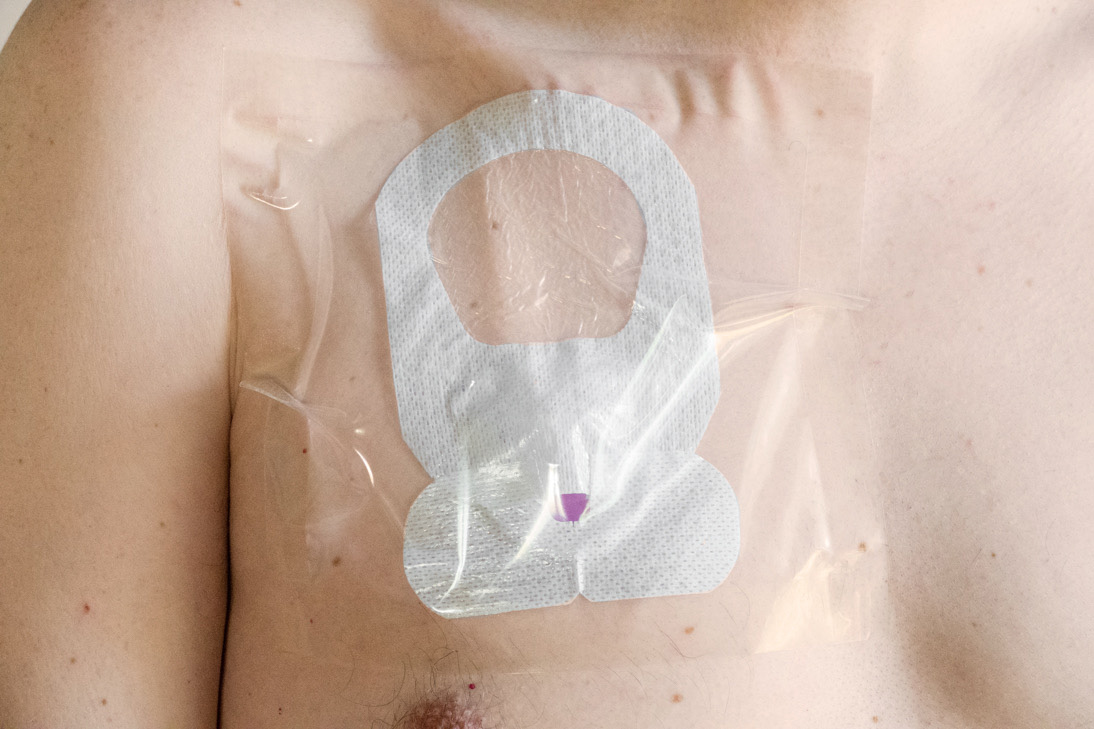
- Helper peels the top tab liner and presses the top edge onto skin about an inch above the dressing, typically near the base of the neck or top of the shoulder.
- Let the film drape over the dressing, following the curve of the shoulder without stretching it tight.
- Peel the bottom liner and press the bottom edge about an inch below the dressing.
- Peel the side liners and smooth the sides front and back. The helper should run a finger along the full border to close any small channels.
- Leave it where it landed. Pulling it up to adjust weakens the adhesive. If it is badly placed, start over with a new one.
If you have no helper, sit facing a mirror, apply the top edge first and work slowly. Choose the larger size so small misalignments still leave the dressing fully covered.
One-handed shower tips
- Get undressed carefully. Take the shirt off the good arm first, then slide it off the operated arm. Dress in the opposite order: operated arm first. Button-front or zip-front shirts are easiest.
- Use a pump bottle for soap and shampoo so you do not need two hands to open caps.
- Wash your hair with your head tilted forward under a handheld shower head, or leave hair for a sink wash with help.
- Keep the water lukewarm and the shower short. Steam and heat loosen adhesive.
- Turn the operated shoulder away from the spray and let water hit your back or the other side.
- Use a shower chair if you feel unsteady. Your balance is off with one arm strapped, and catching yourself with the operated arm can damage the repair.
- Clean under the operated arm gently with a washcloth, keeping the arm close to the body. Your therapist can show you a safe way to do this.
After the shower
Pat the outside of the barrier dry with a towel while you are still seated. Then have your helper peel it off slowly from one corner, holding the skin flat as they go. Check that the dressing is dry, then put the sling back on before you stand and move around.
If the dressing is damp, do not leave it. Follow your discharge instructions for changing it or call the surgeon's office. Our post on keeping a surgical incision dry in the shower covers general dressing care, and if you have a PICC line or IV in your arm as well, see how to shower with a PICC line.
Call your care team if...
- Your dressing gets wet or comes loose.
- You see increasing redness, warmth or swelling around the shoulder, or drainage that is cloudy or smells.
- You have a fever or chills.
- Your hand or fingers go numb, cold or pale on the operated side.
- You fall or feel something pop or shift in the shoulder.
- The skin under the barrier's border becomes itchy, red or blistered. Stop using it and let your team know.
Frequently asked questions
Can I take my sling off to shower?
Often yes, but only if your surgeon says so. Even then, the arm stays passive. No lifting, reaching overhead, or pushing off a wall with it.
Do I need to cover the nerve block catheter site too?
If you went home with a pain pump or nerve block catheter, ask the anesthesia team or surgeon for specific shower instructions. Many people are told not to shower until it is removed.
How do I wash my good armpit with one hand?
A long-handled sponge or a soapy washcloth draped over the shower chair edge works. Some people find a pump bottle of body wash and a handheld shower head make the whole process one-handed.
Is the barrier waterproof enough to swim?
No. It is a moisture barrier for showering and sponge bathing only. Swimming, baths and hot tubs wait until your surgeon clears you.