You just got a PICC line, and somewhere between the placement and the discharge papers someone said, "Keep the dressing dry." Then you got home and realized you have no idea how to wash your hair, your armpit, or anything else without soaking your arm.
You are not alone in this. Showering is the most common question people ask in the first week with a PICC, and the answer is better than most people expect: you can usually shower, as long as the dressing and the line are covered properly and you never put the arm under water.
Quick answer: Most people with a PICC line can shower once their care team says it is OK. Cover the whole dressing and the external tubing with an impermeable shower cover that seals to dry skin, keep the arm out of the direct spray, and keep showers short. Never take a bath, swim, or soak the arm.
Can you shower with a PICC line?
In most cases, yes. The CDC's guidelines for preventing catheter-related infections say a catheter site should not be submerged in water, but that showering is acceptable if the catheter and its connections are protected with an impermeable cover. That is the whole game: impermeable, and covering both the dressing and the connection.
Your own team has the final word. Some infusion nurses want you to wait until the first dressing change, and some patients have reasons (a fresh insertion site that is still oozing, a dressing that is already loose) to sponge bathe for a few days instead. Ask before your first shower, and ask again if anything about the line changes.
Why the dressing has to stay dry
The clear dressing over your PICC is a sterile barrier between the outside world and a catheter that runs into a large vein near your heart. Water does two things to it. It loosens the adhesive, so the edges lift and the dressing stops sealing. And it can carry whatever is on your skin, or in the water, toward the insertion site.
A dressing that has been wet is no longer doing its job, even if it looks fine once it dries. That is why care teams treat a wet dressing as a dressing that needs changing. If that has already happened, read what to do when your PICC dressing gets wet.
What to cover with
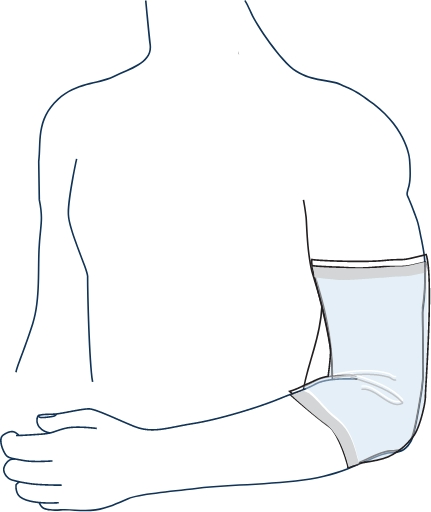
Whatever you use needs to cover three things: the dressing itself, the skin around it, and the tubing and caps that hang below it. It also has to stay put while you lift your arm, turn, and reach.
Two options work well for a PICC:
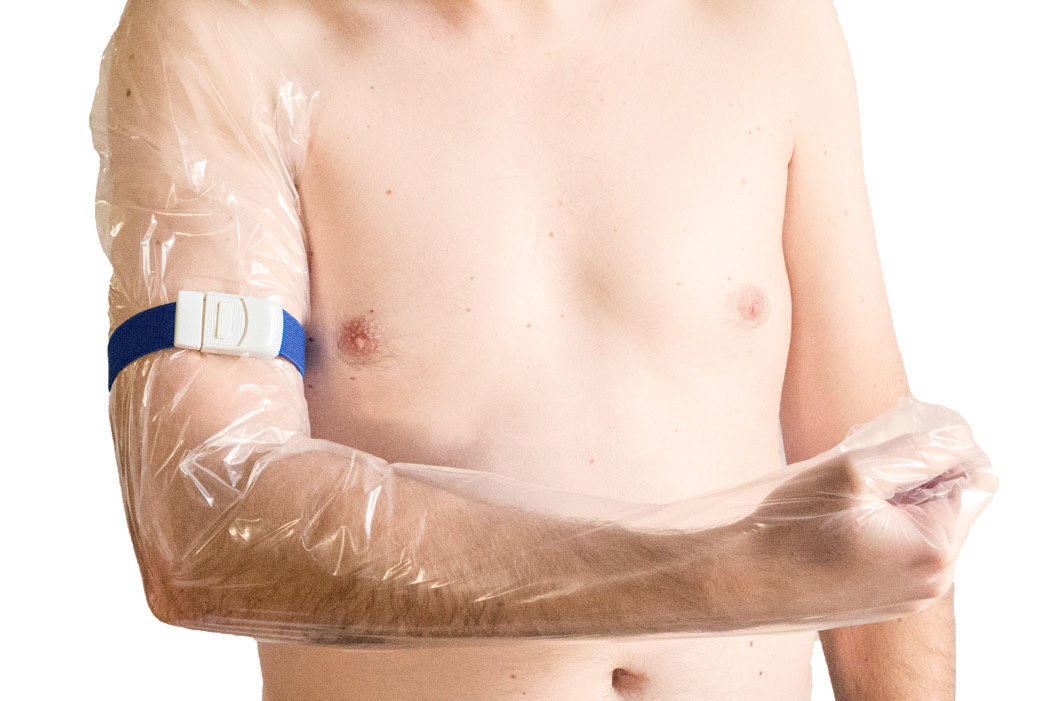
- A full-arm cover. The HydroSeal Sleeve slides over the whole arm and fastens at the top with a push-button buckle strap. It covers the dressing, tubing and caps in one piece, fits adults and children, and needs no adhesive on your skin. It is a good choice if your skin is sensitive or if the line is low on the upper arm close to the elbow.
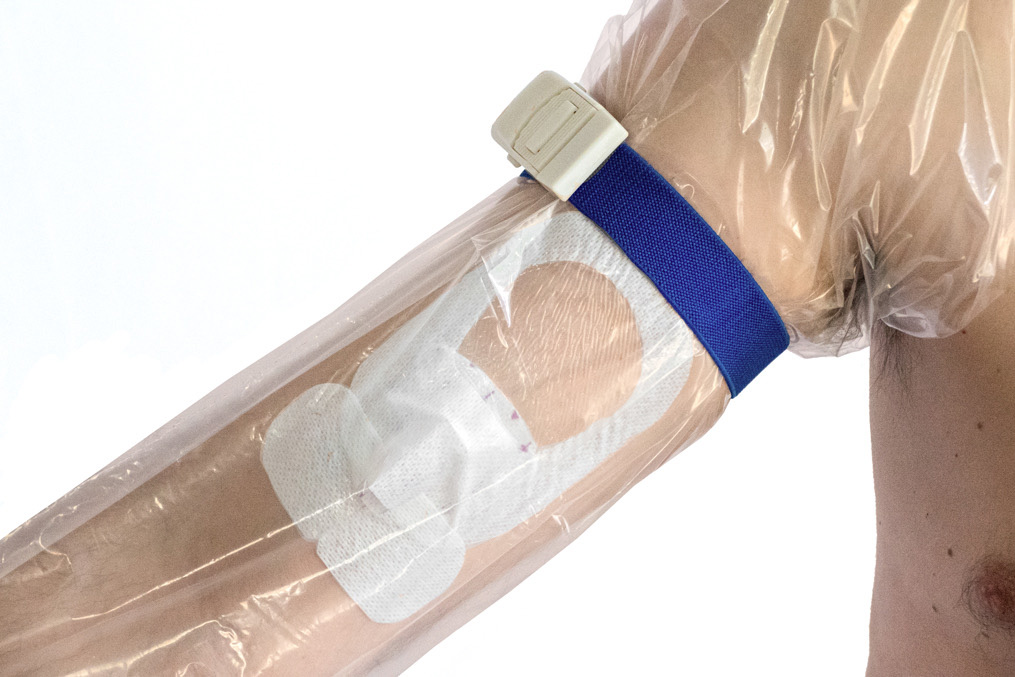
- An adhesive barrier sized for the upper arm. The HydroSeal Flex is a 7" x 9" clear film that sticks to the skin around the dressing. It was designed for PICC sites specifically: a square 9" x 9" barrier tends to wrap all the way around a slim upper arm and stick to itself, while the 7" width reaches past the dressing without overwrapping. The film stretches, so it moves with your arm.
Plastic wrap, bread bags and tape are what most people try first. They tend to leak at the edges, for reasons covered in why plastic wrap fails as a shower cover.
How to shower with a PICC line, step by step
- Get everything ready first. Towel, clean clothes, your cover, and a chair or stool if you get tired standing. Run the water to temperature before you step in.
- Check the dressing. If the edges are already lifting, or it is damp, do not shower. Call your infusion team to have it changed.
- Make sure the skin around the dressing is clean and dry. Skip lotion on that arm on shower days. Lotion under an adhesive cover stops it sticking.
- Tuck the tubing. Coil the external tubing and caps flat against the dressing so they sit under the cover, not hanging below it.
- Apply the cover. For the Sleeve, slide it up the arm and fasten the strap snugly above the dressing. For the Flex, apply the 7" side horizontally and the 9" side vertically, peel the top tab and press it to skin about an inch above the dressing, then the bottom tab about an inch below, then the two sides. Press the border down all the way around. Don't lift and reposition it once it touches skin.
- Keep the arm out of the direct spray. A handheld shower head helps a lot. Wash the rest of you, and keep the covered arm angled away from the water.
- Keep it short. Five to ten minutes is plenty. Steam and long showers soften every adhesive, including your dressing's.
- Dry the outside of the cover before removing it. Pat the cover and surrounding skin dry with a towel while it is still on. Then unbuckle the Sleeve, or peel the Flex slowly from one corner.
- Check the dressing again. If it is dry and sealed, you are done. If there is any moisture under it, call your team.
Washing your hair with a PICC line
Hair washing is where most dressings get wet, because your arms go up and water runs down. A few things help:
- Wash your hair with the other hand, or lean forward and let a helper use the handheld shower head.
- Wash your hair at the sink on days you don't need a full shower.
- Keep the PICC arm lower than your head so water runs away from it, not down toward the cover.
What to avoid
- Baths, swimming pools, hot tubs and the ocean. A PICC site should never be submerged, covered or not.
- Pointing the spray straight at the covered arm.
- Reusing an adhesive cover. Each one is single use.
- Removing your sterile dressing to put on a cover. The cover goes over the intact dressing.
- Shaving the arm to help a cover stick. It irritates the skin and isn't recommended.
Separately from showering, a PICC can catch on sleeves and bedding. Tubular netting such as ProNet holds the line in place day to day, but it is not a shower product. See how to keep a PICC line from snagging.
Call your care team if...
- The dressing gets wet, loosens, or lifts at the edges
- The site is red, swollen, warm, painful, or leaking
- You have a fever or chills
- Your arm, hand or neck on that side swells
- The line looks longer than it was, or a cap comes off
Frequently asked questions
How soon after PICC placement can I shower?
That depends on your team. Many allow a covered shower within a day or two, others prefer you wait until the first dressing change. Ask before your first shower rather than guessing.
Can I use the same cover for the whole week?
Not an adhesive one. Adhesive barriers are single use and lose their seal once removed. A new one for each shower keeps the seal reliable.
Is a full-arm sleeve or a patch better for a PICC?
Both work. A sleeve covers tubing and caps in one step and puts no adhesive on your skin. A patch like the Flex is smaller and less bulky. Many people keep both and use whichever suits the day.
What if I only want a sponge bath?
That is a perfectly good option, especially in the first few days. Keep the washcloth well away from the dressing and wring it out well. Wash in sections and dry each one before moving on.