Bypass surgery or a valve replacement leaves you with a long incision down the middle of your chest, sternal precautions to follow, and often a few smaller wounds from chest tubes or a leg vein harvest. The first shower at home can feel like a big step, and the instructions you were given may not match what a friend or a website told you.
That is because shower rules after heart surgery really do vary. This guide walks through the common approaches, how to protect your chest without breaking sternal precautions, and how to cover the dressing if your team has asked you to keep it dry.
Quick answer: Follow your cardiac surgery team's instructions first. Many surgeons let you wash a healing sternal incision gently with soap and water once the dressing is off, while others want the dressing kept dry for a set time. If you have been told to keep it dry, seal a large clear barrier such as the 10"x12" size over the intact dressing, sit for the shower, keep it short and lukewarm, and do not soak in a bath.
What your surgeon is likely to tell you
Ask your team which of these applies to you, and write it down:
- Incision uncovered and allowed to get wet. Many cardiac programs remove the chest dressing within a few days and encourage gentle daily washing with mild soap, letting water run over the incision, then patting it dry. If this is your instruction, you do not need to cover it.
- Dressing stays on and must stay dry. Some patients go home with a dressing that should not get wet for a period of time, especially if the incision is still draining or was closed in a particular way. This is when a cover helps.
- Some sites covered, some not. You might be allowed to wash the sternal incision but told to keep a chest tube site, pacing wire site or leg harvest dressing covered and dry until it heals.
Whatever your instructions, no baths, hot tubs or swimming until your surgeon clears you. Soaking a healing sternal incision is a different thing from a shower.
Showering within sternal precautions
Your breastbone was divided and wired back together, and it needs weeks to knit. Sternal precautions protect it, and they apply in the bathroom too. The exact rules vary by program, but they commonly include:
- No pushing or pulling with your arms to get in or out of the tub or up from a seat. Use your legs and keep your elbows near your sides.
- No reaching both arms high overhead or behind your back. Washing your hair may need a helper or a handheld shower head.
- No twisting hard to reach the spray or a shelf.
- Brace your chest with a pillow or your crossed arms if you cough or sneeze.
A few bathroom changes make this much easier:
- A shower chair, so you are not standing and getting lightheaded in the heat.
- A handheld shower head, so you bring the water to you rather than reaching for it.
- A non-slip mat and a properly anchored grab bar for balance. Use it to steady yourself, not to haul your weight up.
- Toiletries in pump bottles at chest height or lower.
- Someone at home for the first few showers. Fatigue, blood pressure changes and new medicines can make you dizzy.
How to cover a sternal dressing for the shower
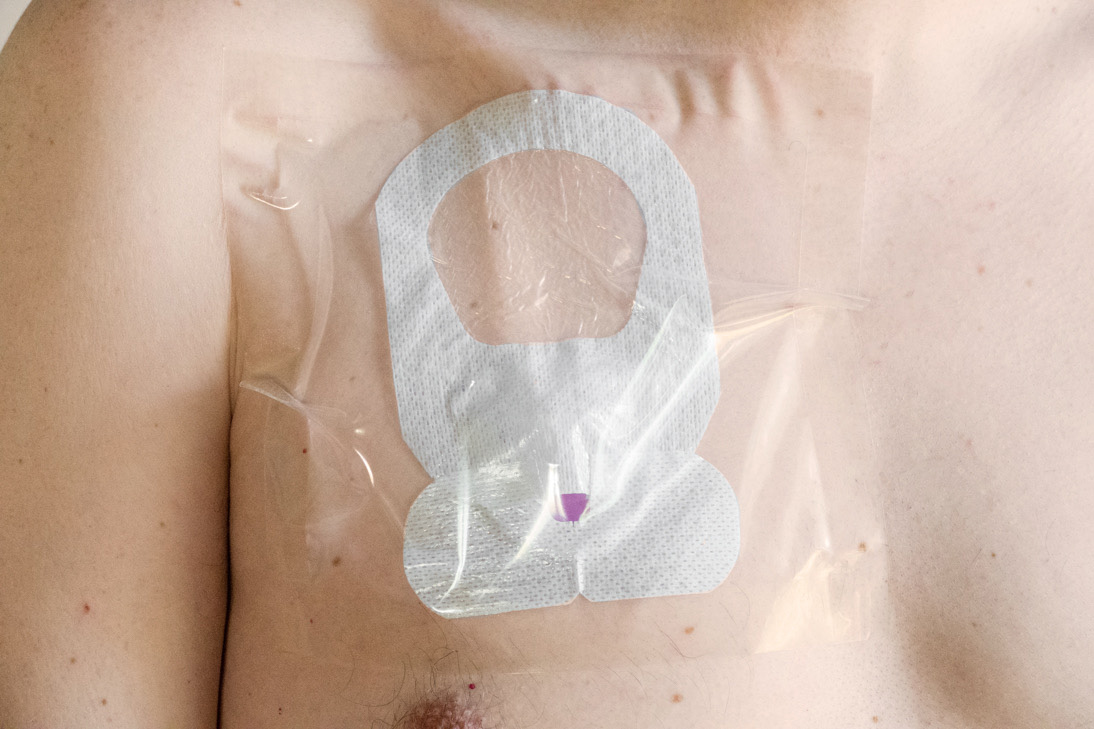
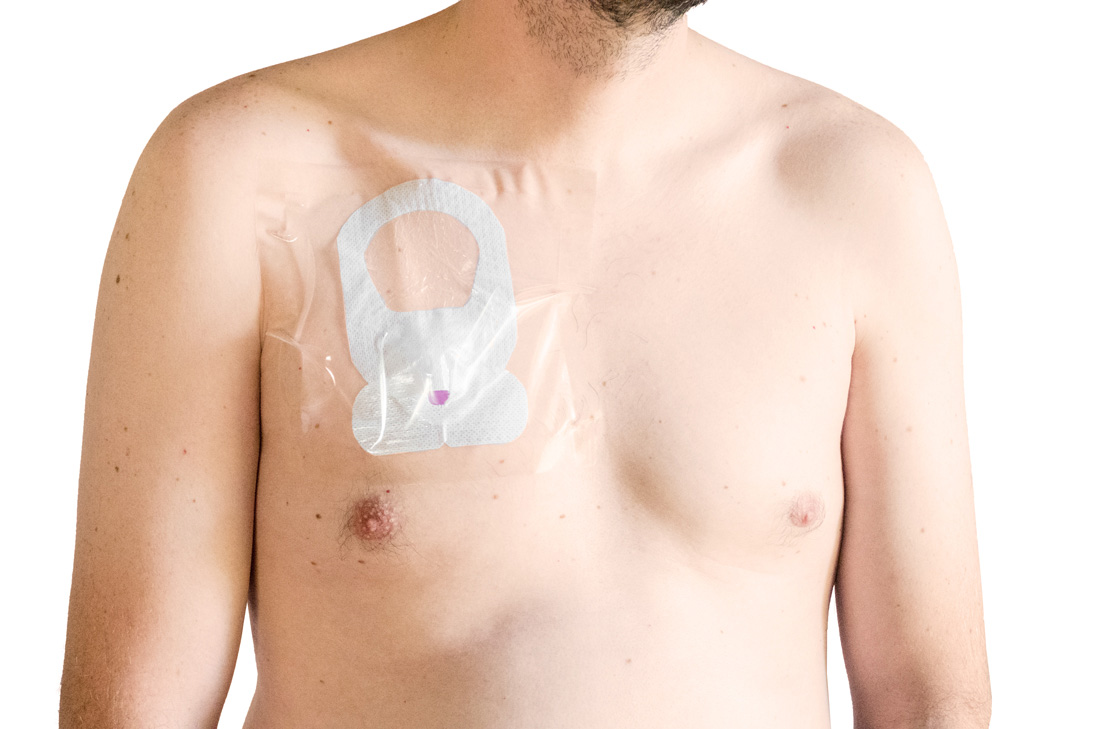
If your team wants the chest dressing to stay dry, a clear, impermeable cover like the HydroSeal Protective Barrier goes over the dressing so water runs off. A sternotomy dressing is long, so the 10"x12" size is usually the one to reach for. Smaller sizes (5"x5" or 7"x7") work for chest tube sites; the HydroSeal size guide shows how to measure. Because the film is clear, you and your caregiver can still see the dressing.
Have a caregiver help with this. Lining up a long barrier on your own chest without reaching or twisting is awkward, and they can check the seal along the bottom edge, which is hard for you to see.
- Sit upright in a supportive chair. Keep your arms relaxed at your sides.
- Check the skin around the dressing. It should be clean and dry, with no lotion, powder or ointment. Do not shave chest hair to make room; if hair is thick, ask your nurse for advice.
- Orient the barrier long-side vertical so it runs the length of the incision.
- Peel the top tab liner and press the top edge to skin about an inch above the top of the dressing, near the base of the neck.
- Let the film lie flat down the chest, then peel the bottom liner and press the bottom edge about an inch below the dressing.
- Peel the two side liners and smooth the sides. Press the whole border flat with a fingertip, paying attention to the dip of the breastbone where gaps can form.
- Don't peel and re-stick. If it is crooked, use a new one.
In the shower, sit with your back to the spray and use the handheld head on your back, legs and arms. Keep it brief and lukewarm. Hot water and long showers can make you lightheaded and weaken adhesive.
Afterward, pat the barrier dry with a towel first, then have your helper peel it slowly from a corner while holding the skin. Check the dressing. If it is damp, do not leave it on; call your team or change it the way you were taught. More on that in how to keep a surgical incision dry in the shower.
What about the leg incision?
If a vein was taken from your leg, you may have a long incision there or a few small ones. Treat it according to your instructions. If it has to stay dry, a separate barrier sized to that dressing can cover it. Keep the leg out of pooled water on the shower floor, and dry your feet carefully before you stand.
Call your care team if...
- Your chest dressing gets wet and you were told to keep it dry.
- You see redness spreading from the incision, new or increased drainage, or the edges separating.
- You have a fever or chills.
- You feel or hear clicking, popping or movement in your breastbone.
- You notice new swelling, shortness of breath or rapid weight gain. Get emergency care for chest pain, fainting or severe trouble breathing.
- The skin under the barrier's adhesive becomes irritated. Stop using it and let your team know.
Frequently asked questions
Is it safe to let water run over my sternal incision?
For many patients, yes, once the dressing has been removed and the surgeon has said so. Gentle washing with mild soap and patting dry is common advice. If you have not been told this, ask before you do it.
Can I use soap or lotion on my chest incision?
Use only what your team recommends, usually mild unscented soap. Avoid lotions, powders and creams on or near the incision unless you have been told otherwise. They also stop a barrier's adhesive from sticking.
How long until I can take a bath after bypass surgery?
Typically not until the incision has fully healed and your surgeon has checked it, which is often several weeks. Getting in and out of a tub can also break sternal precautions, so ask about that too.
Can I wash my hair after open-heart surgery?
Yes, but avoid lifting both arms overhead for long. Many people use a handheld shower head with their head tilted forward, or have a helper wash their hair while they sit.