A few days after a knee replacement, you are home, moving with a walker, and wondering how on earth you are going to get clean. The knee will not bend far, standing on one leg feels risky, and the dressing on the front of your knee is supposed to stay dry.
That is two separate problems: keeping the incision dry and not falling. Most of the work happens before you turn on the water. Get the bathroom and the cover sorted first, and the shower itself is short and uneventful.
Quick answer: Shower only after your surgeon says you can, and sit down to do it. Cover the knee dressing with either a full-leg cover that fastens at the thigh or a large clear barrier sealed to dry skin around the dressing, keep the spray off the knee, and never soak in a bath. Have grab bars, a non-slip mat and someone nearby for the first few showers.
When can you shower after a knee replacement?
It varies by surgeon and by dressing. Some knee dressings are designed to stay on for a week or more and tolerate a covered shower within a few days. Others need to stay completely dry until your first follow-up. Some patients are told to sponge bathe until the staples or stitches are out.
Ask your surgical team before you go home, or call the office: "When can I shower, and does my knee dressing need to be covered?" Also ask about baths. Soaking the knee in a tub, pool or hot tub is usually off limits for several weeks, until the incision has fully healed and your surgeon clears it.
Set up the bathroom before your surgery
This is the part people skip, and it is where falls happen. If you can, do it before the operation so it is ready when you get home.
- Shower chair or tub transfer bench. A transfer bench straddles the tub wall so you sit down outside the tub and slide across, instead of stepping over the edge on a new knee. A walk-in shower usually needs only a sturdy chair.
- Grab bars, properly anchored. Towel bars and soap dishes are not built to hold your weight.
- Non-slip mat inside the shower and a rug with a rubber back outside it.
- Handheld shower head so you can wash while seated and point water away from the knee.
- Long-handled sponge for your feet and lower legs, since bending is limited.
- Everything within arm's reach of the seat: soap, shampoo, towel, clean clothes.
Your physical or occupational therapist can show you how to get in and out safely with your walker. Practice it once, dry, before you try it wet.
Option 1: a full-leg cover
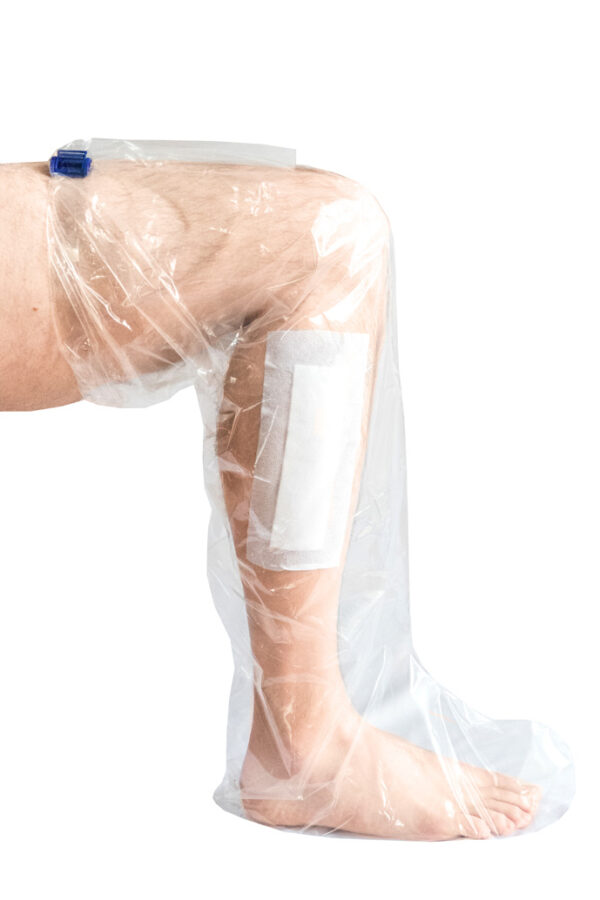
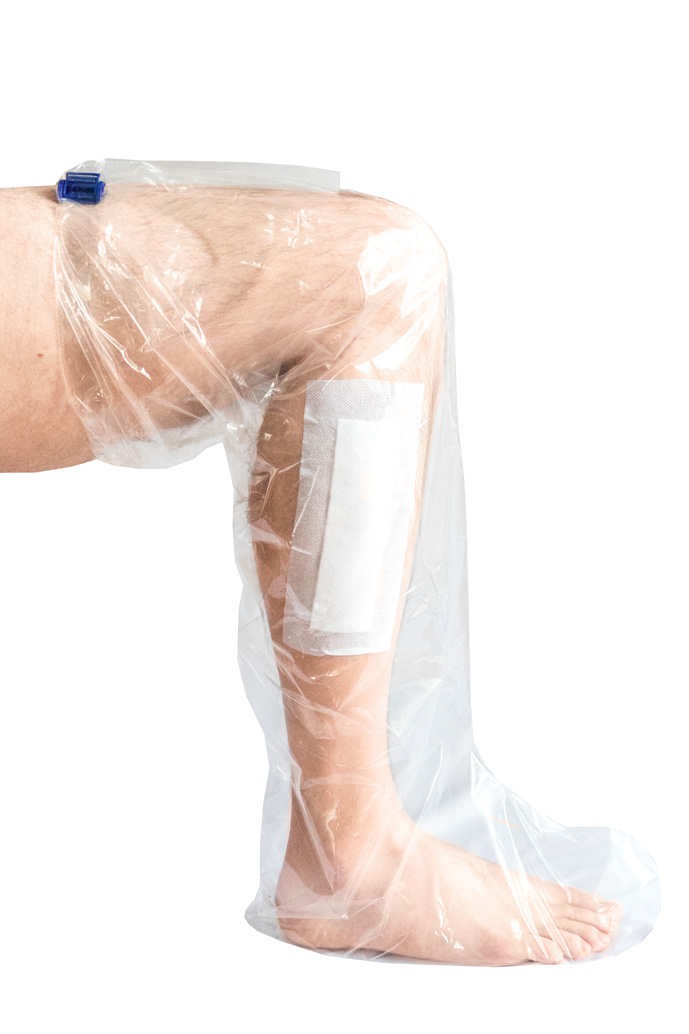
For a knee, a full-leg cover is often the simplest choice. The HydroSeal Boot slides over the foot and up the leg, covering the knee dressing completely, and fastens at the top with a push-button release buckle strap. Nothing sticks to your skin, and it can be put on while you are sitting on the edge of the bed.
The Boot uses a textured film designed with patient safety in mind, and it works for a dressing anywhere from the foot to the thigh. It can also go over a cast. To use it:
- Sit down somewhere stable, outside the shower.
- Gather the cover so you can slide your foot in, then ease it up the leg past the knee. Take your time so you do not catch the dressing edge.
- Pull it high enough that the strap sits well above the top of the dressing, on the thigh.
- Fasten the buckle snug but not tight. It should not dig in or leave you feeling pins and needles.
- Shower seated. Keep the covered leg out of any pooled water on the floor.
- Towel off the outside of the cover before you undo the strap, then slide it down and off.
The Boot is single use. Do not stand or walk on wet surfaces in it without support; even with a textured surface, a wet bathroom floor deserves respect.
Option 2: a large adhesive barrier over the dressing
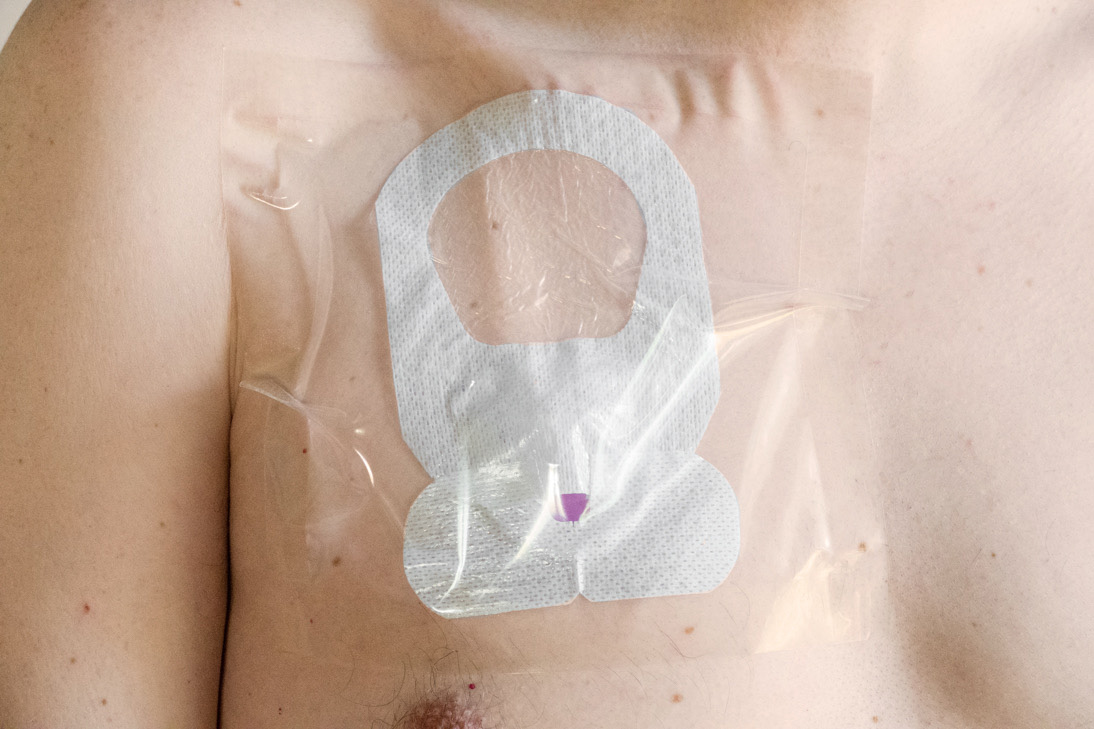
If you prefer something low profile, or the leg cover is awkward with your swelling, a flat HydroSeal Protective Barrier can seal over just the knee dressing. Knee dressings are long, so most people need the 9"x9" or 10"x12" size. The adhesive border must land on bare, dry skin about an inch beyond the dressing on every side, not on the dressing itself.
- Sit with the knee as straight as is comfortable. Applying it with the knee deeply bent can cause the film to pull when you straighten.
- Make sure the skin around the dressing is clean, dry and free of lotion.
- Peel the top tab liner and stick the top edge about an inch above the dressing.
- Smooth the film down over the dressing, peel the bottom liner and stick it about an inch below.
- Peel the side liners and press all the edges flat. Do not lift and reposition.
- After the shower, dry the outside, then peel it slowly from a corner while supporting the skin.
Because the film is clear, you can glance at the dressing during and after the shower to confirm it stayed dry.
Swelling, compression stockings and other details
Knees swell a lot in the first weeks. If you wear compression stockings, ask your team whether they come off for showering and how to get them back on. Check the dressing edges before each shower, and if the skin around it is bruised, blistered or very tender, ask your nurse before putting any adhesive near it.
If you had other surgery recently or have a dressing elsewhere, our general guide on keeping a surgical incision dry in the shower covers sizing and setup for other sites. People in a full leg cast face many of the same issues; see how to shower with a leg cast.
Call your care team if...
- Your knee dressing gets wet, slides or starts to come off.
- Redness spreads around the incision, or the knee becomes hot, much more swollen or more painful.
- You notice drainage that increases, changes color or smells.
- You have a fever or chills.
- Your calf is swollen, tender or warm, or you have sudden shortness of breath or chest pain. Get emergency care for breathing or chest symptoms.
- You fall, even if you feel fine afterward.
Frequently asked questions
Can I stand in the shower after a knee replacement?
Some people can by the second or third week, but sitting is safer for the first showers, especially while you still use a walker or take pain medicine. Ask your therapist when standing is reasonable for you.
How long before I can take a bath after knee surgery?
Usually several weeks, once the incision has fully closed and your surgeon has checked it. Soaking a healing incision is a different risk from a covered shower, so wait for a clear yes.
Do I need help putting on the cover?
Many people manage a full-leg cover on their own while seated. If you cannot reach your foot comfortably yet, have someone slide it on for you. With a flat barrier, a helper can make sure the edges are sealed all the way around.
My incision has skin glue and no dressing. Do I still need a cover?
Some surgeons let glue-closed incisions get briefly wet; others do not. Follow your own instructions. If you have been told to keep it dry, a full-leg cover keeps water off without putting any adhesive near the incision.