A leg or foot cast turns the shower into the most awkward room in the house. You need to keep the cast dry, you probably cannot put weight on that leg, and you are standing on a wet, slippery floor on crutches or one foot. It is no surprise many people put off showering for days.
The good news is that with the right setup, most people with a leg cast can wash safely. This guide treats it as two problems: staying on your feet, and keeping the cast dry. Solve the first one first.
Quick answer: Sit down to shower. Use a shower chair or tub transfer bench, cover the whole cast with a waterproof leg cover that closes at the thigh, keep the casted leg out of the spray, and never stand on the cast unless your doctor has cleared you for weight bearing. Get your clinic's OK before your first shower.
Is it safe to shower with a leg cast?
Usually, yes, once your doctor or clinic says so. Ask before your first shower, especially right after surgery or if you have a splint that may be swapped for a cast soon. Your team will also tell you how much weight, if any, you can put on the leg. Many people with leg casts are told to be non-weight-bearing, which means not even resting the foot on the floor to steady yourself.
The cast needs to stay dry because the padding under the hard shell holds water against your skin. Wet padding can lead to skin breakdown and may mean a new cast. If yours does get wet, call the clinic that put it on. Our arm cast guide covers what to do after a soaking in more detail; the same advice applies to legs.
Set up the bathroom before you need it
A fall in the shower with a broken leg can turn a six-week recovery into something much worse. Before your first shower, put these in place:
- A shower chair or tub transfer bench. A transfer bench straddles the side of the tub so you can sit outside, then slide across without stepping over the edge. For a walk-in shower, a sturdy chair with rubber feet works.
- A handheld shower head. It lets you wash while seated and aim the water away from the cast.
- Grab bars. Proper bars fixed into the wall, not towel racks or suction cups that can pull off.
- Non-slip mats inside the shower and on the floor where you step out.
- Everything within reach. Soap, shampoo and towel where you can get them without standing or twisting.
- A helper, at least the first time. Someone nearby who can steady you during transfers.
Keep crutches or your walker right outside the shower where you can reach them from the chair. Wet crutch tips slip, so dry them before you use them on a hard floor.
Choosing a leg cast cover
A trash bag taped around the thigh is the usual stopgap. The problem is the top. Tape does not seal well on skin that is damp and moving, and water running down your leg finds the gap and wicks into the cast. Plastic bags are also slippery underfoot if you end up stepping on them.
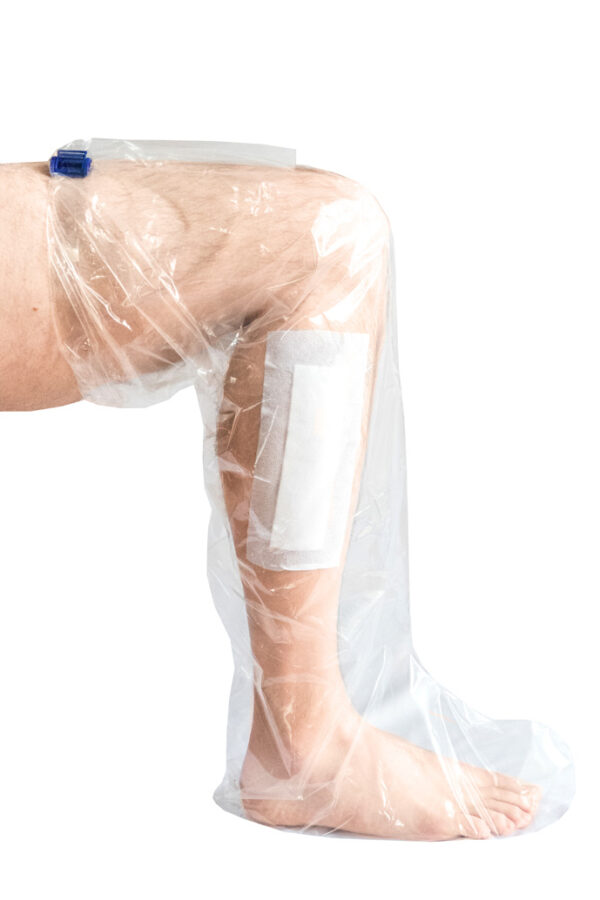
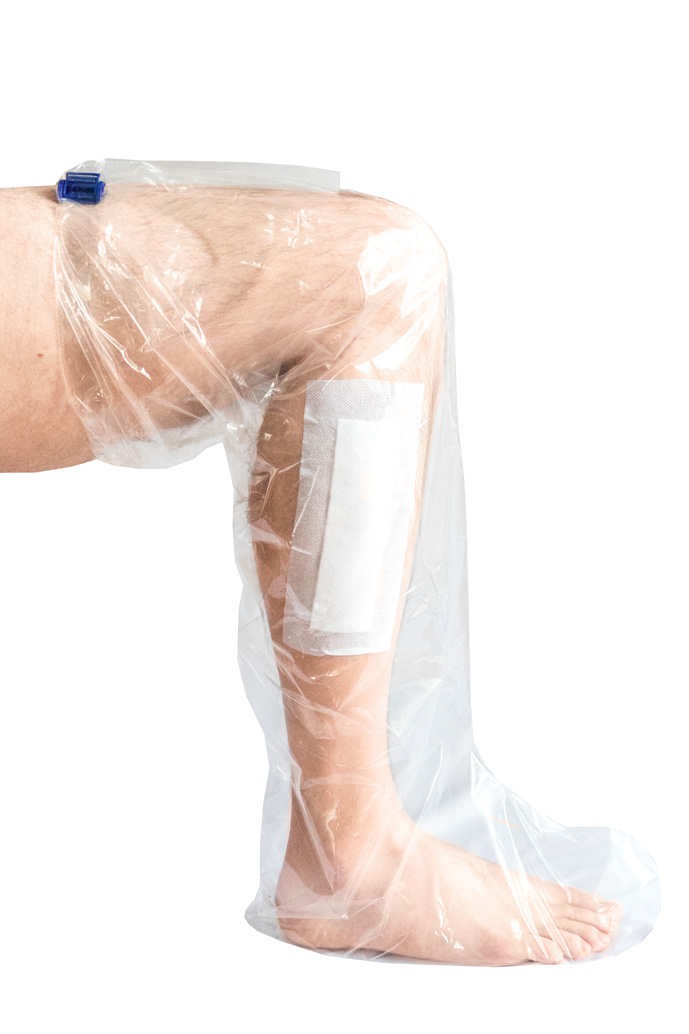
The HydroSeal Boot is a full-leg cover made to accommodate a cast. It closes at the top with a push-button release buckle strap, so you can fasten it snugly on the thigh and release it with one press afterward. The film is textured with patient safety in mind. It covers any foot or leg site, from an ankle cast to a long leg cast, and it is latex-free and single use.
A cover is for showering, not soaking. Even with one on, do not put the cast in a bath, pool or hot tub.
How to shower with a leg cast, step by step
- Sit down on the edge of the bed or a chair to put the cover on while you and the cast are completely dry.
- Slide the Boot over your foot and cast and smooth it up the leg, so the top sits well above the upper edge of the cast.
- Fasten the strap on the thigh. Snug enough that there are no gaps, loose enough that you can slide a finger underneath. Loosen it if your toes tingle or change color.
- Move to the shower using your crutches or walker as you have been taught, and sit on the shower chair or bench before you turn on the water.
- Rest the casted leg outside the spray. On a tub bench you can often keep that leg outside the tub altogether, with the curtain tucked around it.
- Turn on the water with the handheld head pointed away from you until the temperature is right, then wash from the seated position.
- Turn off the water and towel the cover dry before you stand, paying attention to the top near the strap.
- Get out the same careful way you got in, then sit down again to release the buckle and slide the cover off.
- Check the cast for damp spots, especially at the top edge and the toes.
Never stand on the cast unless you have been told you can
It is tempting to put the casted foot down for balance on a slippery floor. If you are non-weight-bearing, that can shift a healing fracture or damage the cast. A cover on the foot is not a non-slip sole either, so do not use it to walk around the bathroom. Sit, slide, and use your hands on the grab bars. If you are allowed partial weight, follow exactly what your team said.
Call your care team if...
- Water got inside the cast or the padding feels damp.
- Your toes are cold, pale, blue, numb or tingling, or very swollen.
- Pain is getting worse, or the cast suddenly feels tight.
- You have new calf pain, swelling or warmth, or any shortness of breath or chest pain. Seek urgent care for these.
- You fell, even if you think you are fine.
- The cast is cracked, soft, smells bad or has drainage coming through it.
When a full shower is too much
Some days, especially in the first week, the transfer in and out of the shower is more than you can manage safely. A sponge bath sitting at the sink is a perfectly good option. Keep the casted leg propped on a stool, away from the basin. Wash your hair at the kitchen sink with a helper, or use rinse-free shampoo caps from the pharmacy. Many people alternate: a sponge bath most days and a supervised shower every few days.
If you are recovering from knee surgery rather than a fracture, the setup is similar but the dressing is different. See showering after knee replacement.
Frequently asked questions
Can I shower standing up with a leg cast?
Only if your doctor has cleared you to put weight on the leg and you feel steady. Most people with a new leg cast are safer sitting. A fall on a wet floor is a real risk.
Will a leg cover fit over a long leg cast or a walking boot?
The HydroSeal Boot is a full-leg cover designed to accommodate casts. For removable walking boots, ask your clinic whether you are allowed to take the boot off to shower, since many people are, and what to wear instead.
What if I don't have a tub bench?
Use a sponge bath until you do. Climbing over a tub wall on one leg is one of the riskiest things you can do with a leg cast. Pharmacies and medical supply stores carry transfer benches, and your care team may be able to arrange one.
Can my child use the same cover?
The Boot covers any foot or leg site. For a small child, make sure the top reaches above the cast and the strap fits snugly on the thigh, and always supervise.