
You have a cast on your arm or wrist, you have been told to keep it dry, and you would really like a proper shower. Maybe you tried a grocery bag and a rubber band and found a damp patch at the top of the cast afterward. Maybe you are just tired of washing one-handed at the sink.
You can shower with an arm cast. The goal is simple: no water reaches the cast or the padding underneath it. This guide covers how to do that, what to use, and what to do if the cast gets wet anyway.
Quick answer: Cover the whole cast with a waterproof arm cover that seals on the upper arm above the top edge of the cast, keep the arm out of the direct spray, and never soak it in a bath or pool. If the cast or its padding gets wet, call the clinic that put it on rather than waiting for it to dry on its own.
Why does an arm cast have to stay dry?
Most casts are a hard outer shell (plaster or fiberglass) over a layer of soft cotton or synthetic padding. The shell is not the main problem. The padding is. Once water gets into it, it stays damp against your skin for hours or days, because there is no way for air to reach it.
Damp padding against skin can cause itching, a bad smell, softened skin that breaks down easily, and in some cases skin infection. A plaster cast can also soften and lose strength if it gets wet. That is why a wet cast often means a trip back to the clinic for a new one.
Some clinics use waterproof cast liners with fiberglass casts. If you were told your cast is waterproof, ask your clinic exactly what that means for you before you get it wet. Do not assume.
Why plastic bags and rubber bands leak
A bread bag over the arm is the classic home fix, and it fails predictably. The rubber band or tape at the top cannot seal evenly around the curve of your arm, so water runs down your shoulder, finds a gap, and wicks into the top edge of the cast. You often do not notice until afterward.
A tight rubber band is also a bad idea on an injured arm. It can squeeze the limb and reduce circulation, which is the last thing a healing fracture needs. We cover the problems with home covers in more detail in why plastic wrap fails as a shower cover.
What to use instead
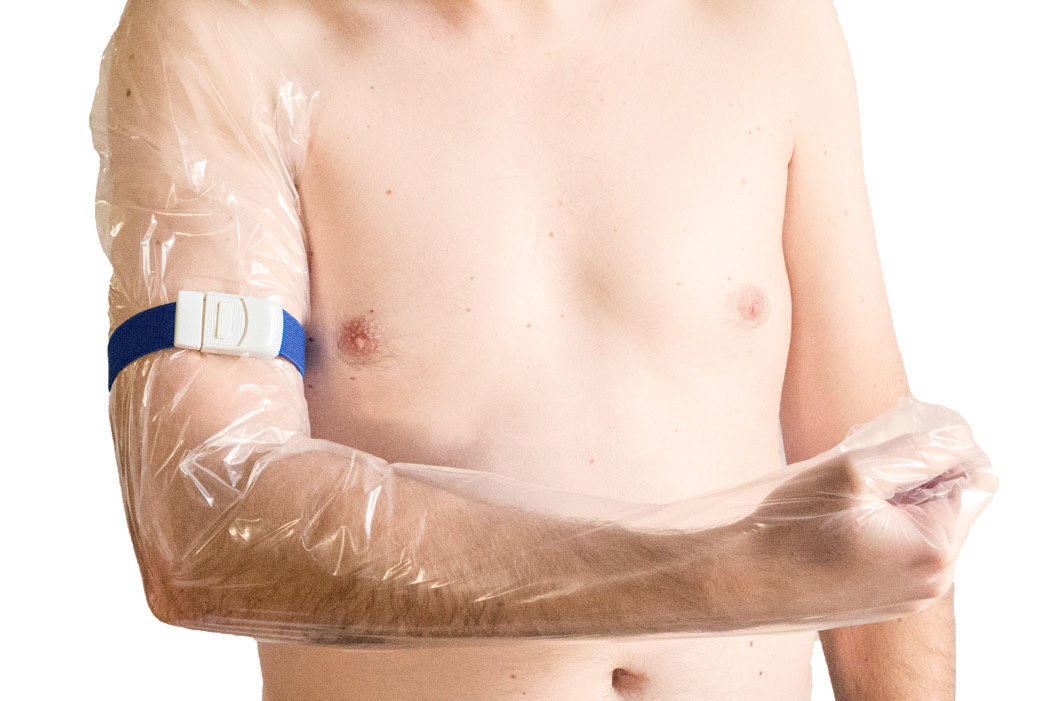
A purpose-made arm cover solves the two weak points of a bag: it is long enough to go well past the top of the cast, and it closes at the upper arm with a strap instead of a rubber band.
The HydroSeal Sleeve is a full-arm cover with a push-button release buckle strap at the top. It is a universal size that conforms to adult and pediatric arms, and it is made to accommodate a cast. Because the buckle releases with a button, you can take it off one-handed after your shower without tugging at the injured arm. It is latex-free and single use.
Whatever cover you use, it keeps water out of the cast during a shower. It is not designed for soaking, so baths, pools and hot tubs are still off the table.
How to shower with an arm cast, step by step
- Check with your clinic first. Make sure showering is allowed for your type of cast and injury, especially in the first few days.
- Set up before you undress. Put soap, shampoo and a towel within reach of your good hand. A handheld shower head makes this much easier.
- Put the cover on while you are dry. Slide the Sleeve over your hand and cast, smooth it up the arm, and bring the top well above the upper edge of the cast.
- Fasten the strap snugly, not tightly. It should sit flat against the skin with no gaps, but you should be able to slip a finger under it. If your fingers tingle or change color, loosen it.
- Keep the arm out of the main spray. Hold the covered arm up and away from the water, or rest it on the shower wall. The cover is your backup, not permission to put the arm under the stream.
- Keep it short. A quick shower means less time for water to find any weak spot.
- Dry the outside before you take it off. Towel the cover dry, especially around the top, so drips do not run onto the cast as you remove it.
- Release the buckle and slide the cover off. Check the top edge of the cast and the padding for any damp spots.
Washing your hair and body with one arm
Hair washing is where most people get into trouble, because they lift both arms out of habit. A few things help:
- Use a handheld shower head and tilt your head back or forward so water runs away from the injured side.
- Use a pump bottle of shampoo instead of one you have to squeeze and open.
- A long-handled bath sponge helps you reach your back and the opposite side.
- Sit on a shower chair if you feel unsteady. You cannot catch yourself properly with one arm in a cast.
What to do if your arm cast gets wet
Do not panic, but do not ignore it either. What you do depends on how wet it is.
A few drops on the outside of a fiberglass cast: pat the outer shell dry with a towel. If the padding underneath stayed dry, you are probably fine. Keep an eye on it.
Water got into the padding, or the cast is soaked: call the clinic or office that put the cast on and tell them what happened. They may want to see you and replace it. Many clinics suggest blotting the outside dry and using a hair dryer on the cool setting while you wait, aimed at the outside of the cast. Never use the hot setting, because you cannot feel how hot the air is under the cast and it can burn the skin. Ask your clinic before relying on this.
Do not push towels, cotton swabs or anything else down inside the cast to dry it. That can damage the skin and the padding.
Call your care team if...
- The padding inside the cast is wet or stays damp.
- The cast smells bad, or there is drainage or staining coming through it.
- Your fingers are numb, tingling, pale, blue or very swollen.
- Pain is getting worse instead of better, or the cast feels much tighter.
- The cast is cracked, soft or loose.
- You have a fever or the skin at the edges of the cast is red or broken.
Arm casts on children
Kids forget, splash and want to play, so supervise every shower and keep it brief. The Sleeve's universal size conforms to smaller arms. A tub bath is risky because a child's arm drifts into the water, so a shower or sink sponge bath is usually safer. If your child also has a line or port, see our guide to bathing a child with a central line.
Frequently asked questions
Can I take a bath with an arm cast if I hang my arm over the side?
It is possible, but it is risky. Arms slip, and one dip into the water can soak the padding. A shower with a cover, or a bath with only a few inches of water and someone to help, is safer. Ask your clinic what they recommend for you.
How long can I leave a cast cover on?
Only for the length of the shower. Take it off as soon as you are done and dry. Leaving any cover on for long periods traps heat and sweat against the skin.
My cast itches. Can I pour water or powder down it?
No. Do not put water, powder, lotion or objects inside the cast. Itching is common. Ask your clinic what they suggest; some recommend a hair dryer on the cool setting blown over the outside of the cast.