Your child has come home with a central line, maybe a Broviac or Hickman in the chest, or a PICC in the arm. The nurses showed you how to flush it and change the dressing, and somewhere in the middle of all that they said: no baths. If your child loves splashing in the tub, or just needs to get clean after a day of being a kid, that rule can feel impossible.
Bath time can still happen. It looks different for a while, and it takes a bit of planning. This guide pulls together what parents find works, so it stays safe for the line and calm for everyone.
Quick answer: A child with a central line should not sit in a bath or go swimming, because the site and dressing must never be submerged. Instead, use a short shower, a hand-held sprayer in an empty tub, or a sponge bath, with the dressing covered by a waterproof barrier. Always follow your child's care team on what is allowed.
Why no tub baths?
A central line runs into a large vein close to the heart. The dressing over the exit site is there to keep germs out, and it only works when it is dry and sealed. Bath water carries bacteria from the whole body, and soaking can loosen a dressing from underneath. The CDC's guidelines for preventing catheter-related infections say not to submerge a catheter site in water, and that showering is acceptable if the catheter and its connections are protected with an impermeable cover.
Some children's hospitals have their own rules on top of this, for example no showering for the first few days after placement, or sponge baths only for infants. Ask your child's team what they want for your child.
Options that work at different ages
Babies and toddlers
A sponge bath on a towel or in an empty tub is the easiest. Wash one part of the body at a time and keep the line and dressing out of reach of the wet washcloth. Some parents do a quick rinse with a hand-held sprayer in an empty tub, with the dressing covered and the child sitting on a non-slip mat, never in standing water.
Preschool and school age
A short shower with a parent helping, or the "empty tub" method: the child sits or stands in a dry tub with the drain open while you use a hand-held sprayer from the shoulders down. Hair washing can happen separately, leaning back over the edge of the tub or at the kitchen sink.
Older kids and teens
Most can shower on their own once they know the routine, but check the cover is on properly before they start and look at the dressing after. Teens care a lot about privacy, so teach them to check the dressing themselves and tell you if it got damp.
Covering the line for bath time
The right cover depends on where the line is.
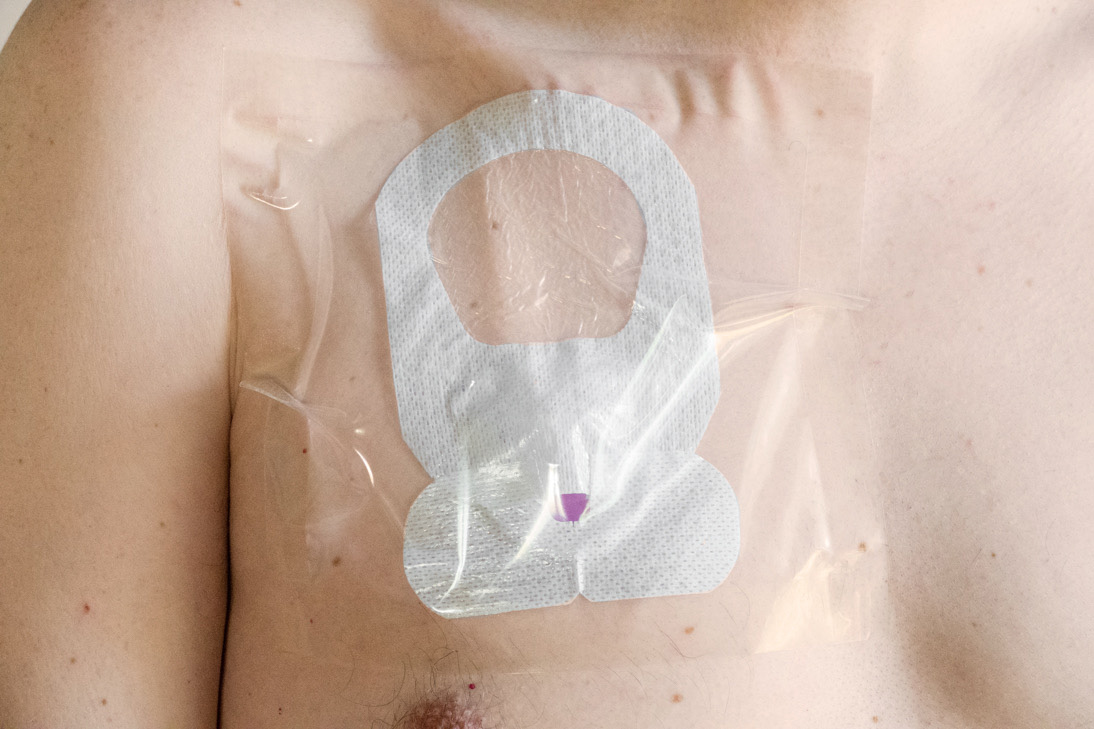
Chest lines (Broviac, Hickman): the HydroSeal Protective Barrier is a clear, impermeable film with an adhesive border that goes over the existing dressing. It keeps the dressing dry during a shower or sponge bath, and because it is clear you can see the site through it. The smaller 5"x5" or 7"x7" sizes often suit a child's chest; pick one large enough that the adhesive border sits on clean, dry skin all around the dressing. Our HydroSeal size guide can help. Coil the external tubing and lumens up under the barrier or secure them as your nurse showed you, so they do not dangle in the water.
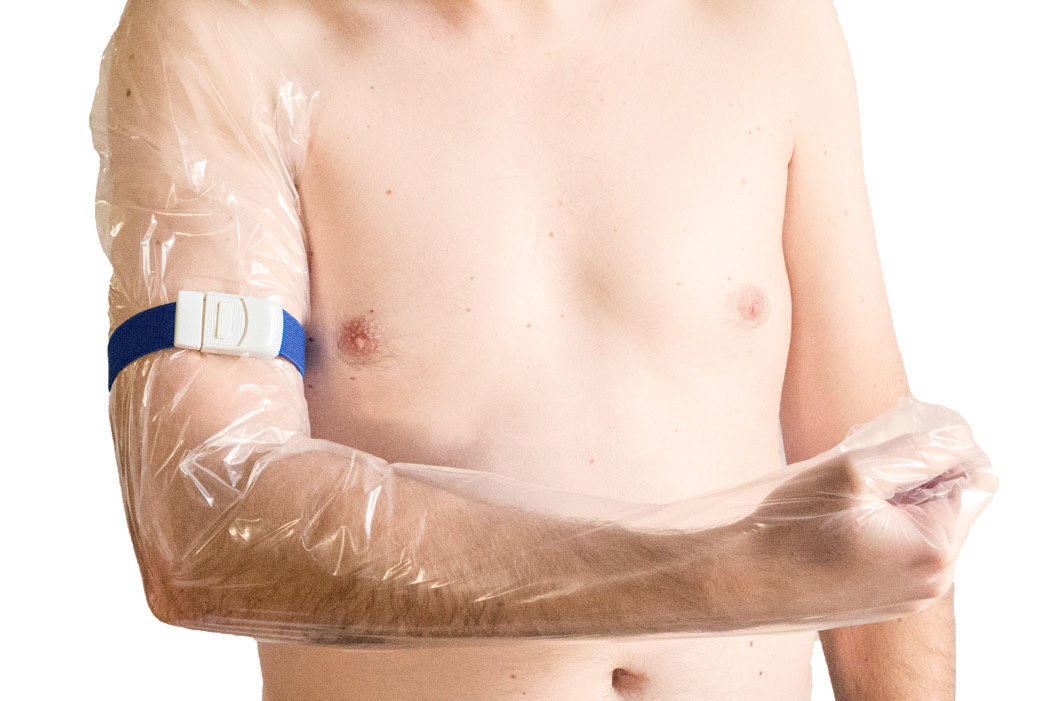
Arm lines (PICC): the HydroSeal Sleeve is a full-arm cover with a push-button buckle strap at the top. It is a universal size that conforms to pediatric and adult arms, so it fits small arms without a separate child size. The strap closes well above the PICC site.
A few rules for any barrier:
- Never remove the sterile dressing to put the barrier on. It goes over the top.
- The adhesive sticks to skin around the dressing, never onto the dressing itself.
- Skip lotion on the skin where the adhesive will go, since it keeps it from sticking.
- Do not reposition it once it is on. Each barrier is single use.
- If your child's skin gets red or irritated under the adhesive, stop using it and tell their nurse.
A bath-time routine, step by step
- Get everything ready first: barrier or Sleeve, towels, clean clothes, washcloths, shampoo. You do not want to leave a wet child to grab something.
- Wash your hands.
- Check the dressing is dry, intact and sealed before you start.
- Apply the cover while your child is dry. For a chest barrier, peel the top liner and press the border onto skin about an inch above the dressing, then the bottom, then the sides, smoothing as you go.
- Keep the water warm and the shower short, with the spray aimed below the cover, not straight at it.
- Towel the cover dry first, then peel the barrier slowly from one corner, or release the Sleeve's buckle and slide it off.
- Look at the dressing. If it is damp at all, call your child's team or change it the way you were taught.
Keeping it calm
Kids pick up on worry. A predictable routine helps more than anything:
- Do it at the same time each day and in the same order.
- Let your child help: peel a liner, choose the towel, count to ten while you smooth the edges.
- Talk about it as "putting on the line's raincoat" rather than something scary.
- Keep bath toys, but in a dry tub or a sink of water for hands only.
- Practice applying a barrier on a doll or teddy if your child is anxious.
- Keep it short. A five-minute shower that goes well beats a long one that ends in tears.
Between baths: keeping little hands off the line
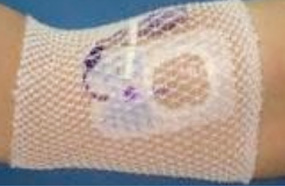
Young children pull, scratch and tug at anything taped to them. ProNet is a soft, pre-cut tubular gauze netting that slides over the arm to hold a PICC dressing in place and keep the line from catching on clothes or toys, without sticky tape. For a chest line, ask your nurse how they prefer the tubing secured. It conforms to pediatric and adult arms without constricting. It is not a shower product, so take it off before bath time and put it back on once your child is dry. For more ideas, see how to keep a PICC line from snagging.
Call your child's care team if...
- The dressing gets wet, loose or peels up at any edge.
- Your child has a fever or chills, especially after a line flush.
- There is redness, swelling, pus or tenderness at the site.
- The line looks longer, is cracked or leaking, or a cap has come off.
- The arm or neck on the side of the line is swollen.
Frequently asked questions
Can my child go swimming or play in a paddling pool?
No, not while the line is in. Pools, paddling pools, lakes and hot tubs all mean submerging the site. Ask the team about water play that keeps the chest or arm dry.
How often should my child have a full wash?
It depends on your child and their team's advice. Many families do a sponge bath most days and a covered shower a few times a week.
My child has a port, not a Broviac. Is it the same?
An implanted port with no needle in it is usually treated differently from a line with tubing outside the body. Ask your team. Our chemo port guide covers both situations.