Most central line care bundles are detailed about insertion, hub scrubbing and dressing changes. Bathing usually gets a single line, if it appears at all. Yet bath time is one of the most predictable moments in the day for a dressing to get wet, and a wet dressing means an unplanned change, extra supplies, and nursing time nobody budgeted for.
This guide is for nurse leaders, infection preventionists, and educators in hospitals, long-term care, home health and infusion centers who want to turn "keep the dressing dry" into a repeatable step that every shift does the same way.
Quick answer: Write bathing into your line care policy as a defined step: assess the dressing before bathing, cover it with an impermeable barrier, use a shower or sponge bath (never immersion), remove the cover and reassess afterward, and change any wet dressing per protocol. Then stock the right barrier sizes where bathing happens and teach patients going home the same routine.
Why bathing belongs in the line care bundle
The CDC's guidelines for preventing intravascular catheter-related infections say not to submerge the catheter or catheter site in water, and that showering is acceptable if the catheter and connecting device are protected with an impermeable cover. That is a clear expectation. The gap in most facilities is how it gets carried out.
Without a defined step, practice varies. One aide wraps the arm in a plastic bag and tape. Another skips the shower to be safe. A third does a quick bed bath and hopes for the best. Each approach has a different chance of leaving the dressing damp, and no one is documenting which one was used.
A written bathing step gives staff one method, gives educators something to teach, and gives you something to audit.
What a bathing protocol should include
Adapt the following to your setting and have it reviewed by your vascular access team and infection prevention.
- Confirm bathing orders. Check for surgical or provider restrictions, especially after recent insertion or surgery. Note whether shower, sponge bath, or neither is permitted.
- Assess the dressing first. If it is already loose, damp or soiled, change it per protocol before or after bathing rather than trying to cover it.
- Apply an impermeable cover over the intact dressing. The cover's adhesive goes on clean, dry, lotion-free skin around the dressing, never on the dressing itself. The sterile dressing stays in place.
- Bathe without immersion. Shower or sponge bath only. No tubs, whirlpools or soaking basins with a line in place.
- Direct water away from the site. Use a handheld shower head, keep the access side angled away from the spray, and wash the access area last.
- Remove the cover correctly. Towel the outside dry, then peel slowly from a corner. Covers are single use.
- Reassess and document. Record dressing integrity after bathing and whether a change was needed.
- Act on a wet dressing. Change it per policy. Do not leave a damp dressing in place until the next scheduled change.
Add safety items that apply to your population: shower chairs, grab bars, non-slip mats, and staff assistance for patients at risk of falls.
Choosing a cover
Improvised covers such as plastic wrap, bags and tape are cheap, but they are hard to seal consistently and the tape creates its own skin problems. Our article on why plastic wrap fails as a shower cover goes into the details. For a protocol, you want a product that applies the same way every time, so training and audits mean something.
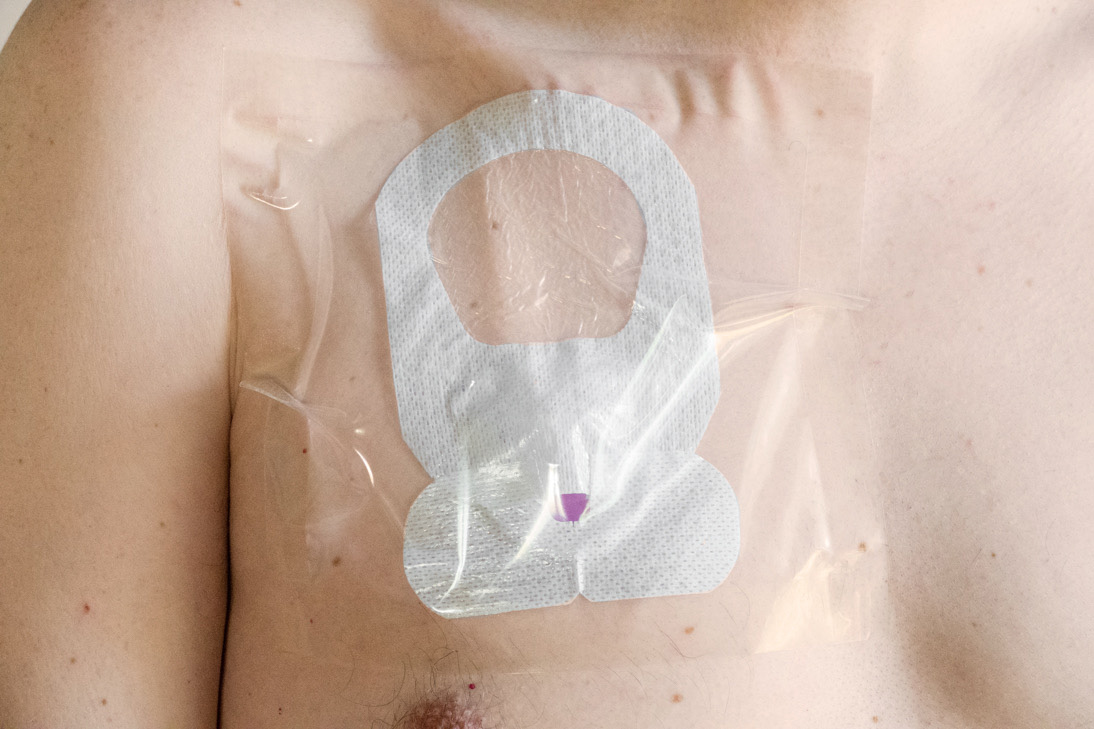
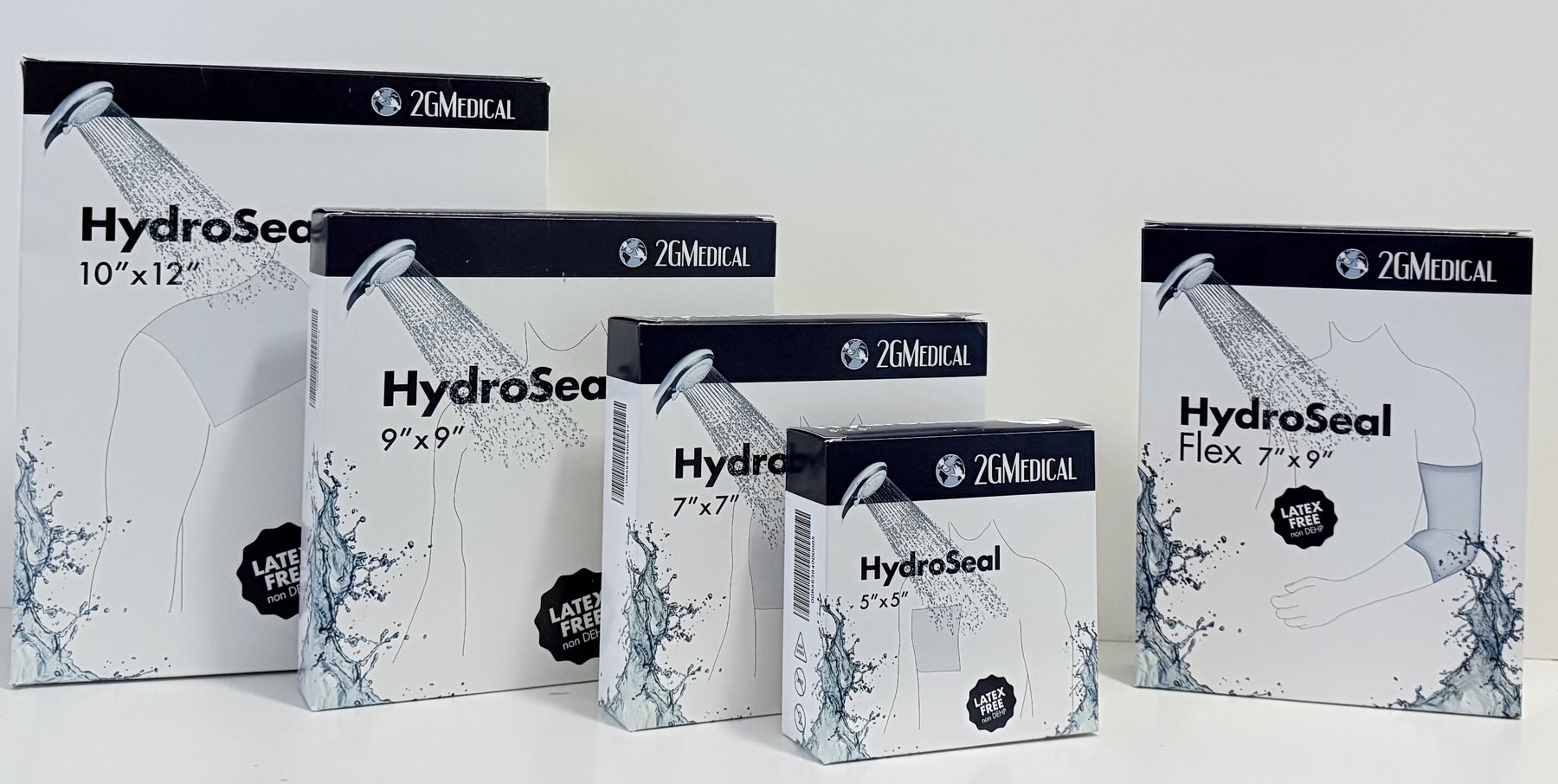
HydroSeal Protective Barrier is a clear, impermeable, latex-free and non-DEHP film with an adhesive border, intended to keep vascular access sites, dressings and incisions dry during showering or sponge bathing. Pre-tabbed release liners guide application in a fixed order: top edge about an inch above the dressing, bottom edge about an inch below, then the two sides. That sequence is easy to put in a competency checklist. The film is clear, so staff can see the site without removing anything.
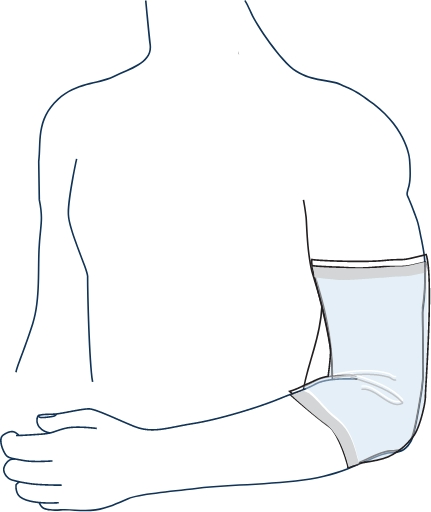
HydroSeal Flex is a 7"x9" barrier with a stretchable film for range of motion. It was developed for upper-arm PICCs, where a 9"x9" tends to wrap around the arm and stick to itself. The Flex is applied with the 7" side horizontal and the 9" side vertical.
For full-limb coverage, such as a hand or forearm site, or a patient with a cast, the HydroSeal Sleeve (arm) and Boot (leg) close with a push-button buckle strap and fit pediatric and adult limbs.
Stocking the right sizes
A protocol only works if the right cover is in reach at bath time. A simple way to plan stock is to match sizes to the devices your units see most. Treat this as a starting point and confirm fit against the dressings you actually use:
| Common use | Typical choice |
|---|---|
| Peripheral IV, small dressings | HydroSeal 5"x5" |
| Standard PICC or port dressing | HydroSeal 7"x7" |
| Upper-arm PICC needing extra reach | HydroSeal Flex 7"x9" |
| Larger chest dressings, tunneled catheters, dialysis catheters | HydroSeal 9"x9" |
| Long incisions, sternotomy, abdominal or back sites | HydroSeal 10"x12" |
| Hand, forearm or casted arm | HydroSeal Sleeve |
| Foot, lower leg or casted leg | HydroSeal Boot |
Size so the adhesive border lands on at least an inch of clean skin beyond every edge of the dressing. Our HydroSeal size guide has more detail by device and body site.
Practical stocking tips:
- Keep covers with bathing supplies, not only in the central supply room. If it is not in the shower room or on the bath cart, it will not get used.
- Start with the two or three sizes that match your most common devices, then add others as usage shows.
- Pouches of 7 suit home health bags and discharge kits. Boxes and cases suit inpatient units.
- Add the cover to the order set or discharge checklist for patients going home with a line.
Line security between baths
Bathing is one moment of risk. Snags during repositioning and dressing are another. It helps to pair the bathing step with a soft tubular net such as ProNet to hold dressings and tubing in place between baths without extra tape. ProNet is gauze and not a shower product, so it comes off before bathing and goes back on afterward. For confused patients, see preventing IV dislodgement.
Training and competency
- Include cover application and removal in annual vascular access competencies, with a return demonstration.
- Train nursing assistants and bath aides, not only RNs. They often do the bathing.
- Teach the common errors: adhesive on the dressing, lotion on the skin, repositioning the adhesive after it touches skin, and reusing a cover.
- Post a one-page visual guide in shower rooms and on bath carts.
Patient and family education
In home health and outpatient infusion, the patient or a family member does the bathing. Give them the same steps your staff use, in plain language:
- Never soak the line: no baths, swimming or hot tubs.
- Cover the dressing every time, with a new cover.
- Dry the outside of the cover before peeling it off.
- Call if the dressing gets wet, and who to call.
Our patient guides on showering with a PICC line and sponge bathing with a central line can be shared as handouts.
Measuring whether it is working
You do not need a research study to know if the protocol is landing. Simple measures you can track locally include unplanned dressing changes with a documented reason of "wet," audit results for cover use at bath time, and stock usage by unit. Review them with staff so the protocol stays practical.
Ordering for your facility
HydroSeal and ProNet are made in the USA and available by pouch, box and case, and through medical distributors. For facility pricing, visit bulk orders.
Frequently asked questions
Can HydroSeal be used for sponge baths as well as showers?
Yes. It is intended to keep dressings dry during showering or sponge bathing. It is not for immersion.
Is the barrier sterile?
No. It is a non-sterile moisture barrier that goes over the sterile dressing. It does not replace the dressing.
Does covering the dressing prevent infections?
A cover keeps the dressing dry. It is one piece of your line care bundle, not a stand-alone infection prevention measure.