The first night home with a new dressing, almost everyone does the same thing. You find the roll of cling film in the kitchen drawer, wrap it around your arm a few times, run a strip of tape around each end, and step into the shower hoping for the best. Then you come out and the dressing underneath is damp anyway.
It isn't that you wrapped it badly. Plastic wrap and tape have built-in problems as a shower cover, and understanding them makes it much easier to choose something that actually keeps a dressing dry.
Quick answer: Plastic wrap fails because it never truly seals to skin. Water wicks in along the edges, household tape loosens when it gets wet, and the wrap shifts as you move. A purpose-made barrier seals with an adhesive border on dry skin around the dressing, or with a strap above a full-limb cover, so water has no path in.
The five reasons plastic wrap leaks
1. It clings to itself, not to you
Cling film sticks well to more cling film and to smooth glass. Skin has hair, texture and natural oil, and the wrap rests on it rather than bonding to it. Every layer leaves a tiny channel, and water moves along channels like that very easily.
2. The edges are the weak point, and there are a lot of them
A wrapped arm has an edge at the top, an edge at the bottom, and a seam where the roll finished. Each one is a gap that depends on tape to close it. Water running down your arm meets the top edge first, which is exactly where people tend to tape least carefully.
3. Household tape isn't made to get wet
Most packing tape, masking tape and even many medical tapes lose grip in warm water and steam. The tape that looked secure when you started is lifting by the time you rinse your hair. Tape that does hold firmly can be hard on skin when you pull it off, especially skin that is already fragile from treatment or repeated dressing changes.
4. Movement opens gaps
Raise your arm to wash your hair and the wrap slides. Bend your elbow or knee and it bunches on one side and pulls away on the other. A cover that only stays sealed while you stand still doesn't help much in a shower.
5. You can't see what's happening underneath
Several layers of crinkled film, sometimes over a bread bag, make it hard to see the dressing. You often don't know it has leaked until the cover comes off.
What about bags, gloves and DIY combinations?
Bread bags, produce bags, trash bags and rubber gloves all share the same problem: an open end that relies on tape or a rubber band. Rubber bands tight enough to stop water are tight enough to restrict circulation, which is a real concern on a limb with an IV, a cast, or swelling after surgery. Loose ones let water in. Bags also tear easily on a cast edge or a fingernail.
None of this is a reason to feel bad about trying. It is just why so many people find themselves calling the clinic for an unplanned dressing change. If that is where you are now, see what to do if your PICC dressing got wet.
What a purpose-made barrier does differently
A medical shower barrier is designed around the one thing plastic wrap can't do: create a single continuous seal on skin, away from the dressing. There are two ways to get that.
An adhesive border on dry skin
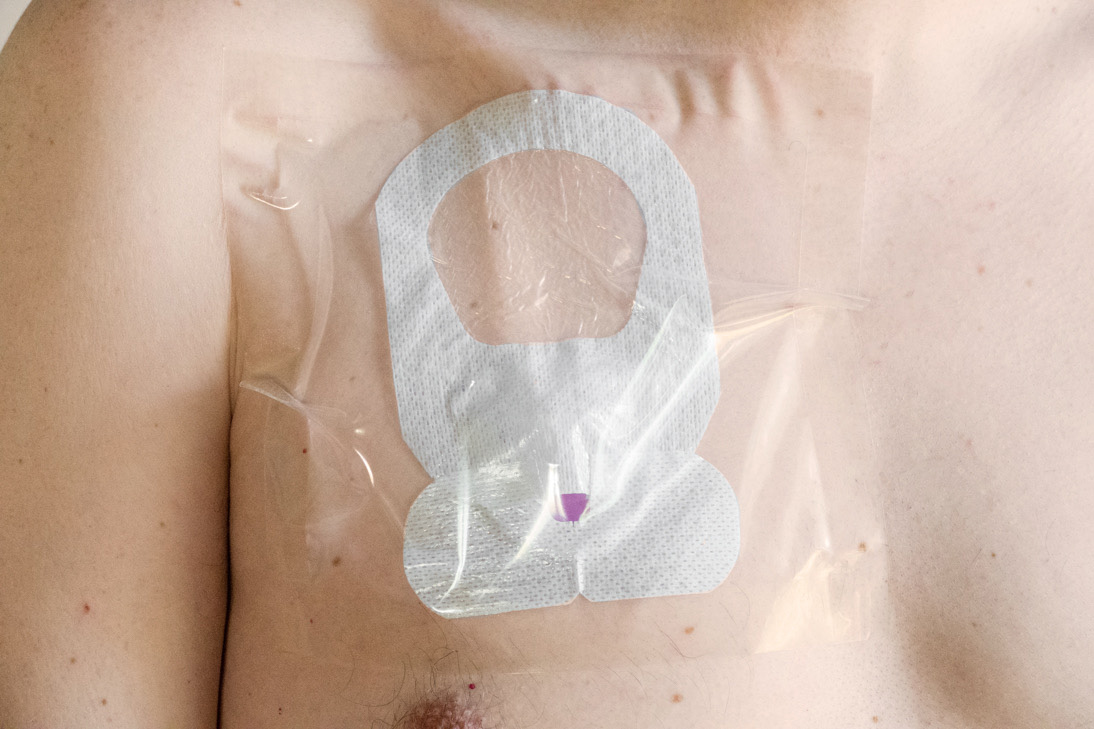
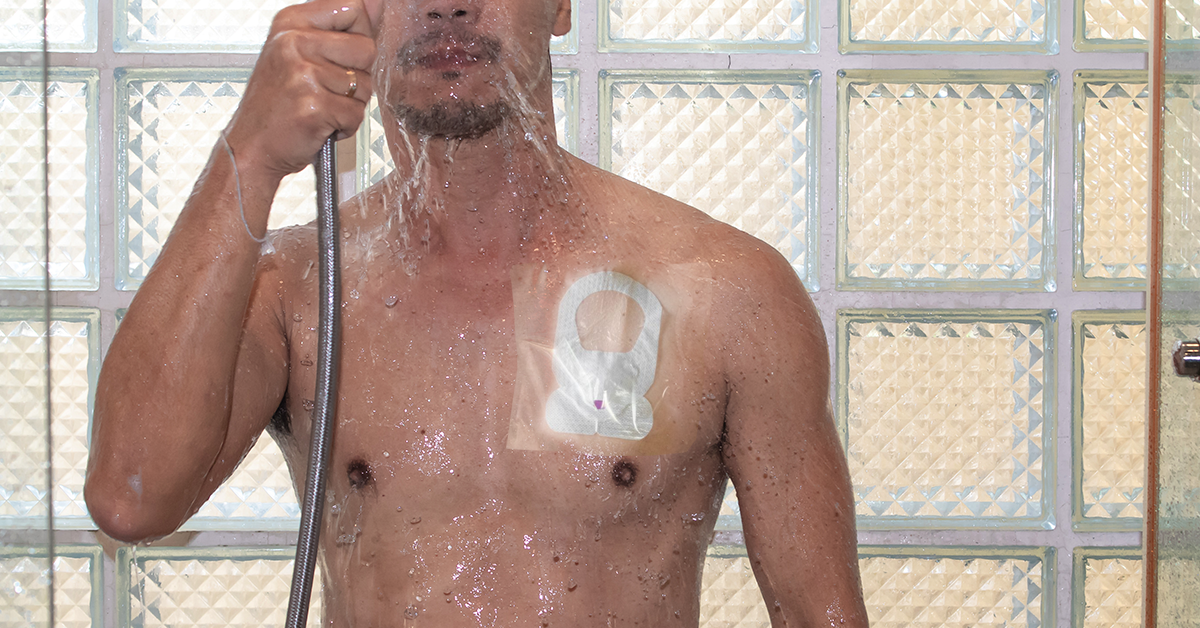
The HydroSeal Protective Barrier is a clear, impermeable film with an adhesive border. You place it over your intact dressing, and the border sticks to clean, dry skin about an inch out from the dressing on every side. Pre-tabbed release liners let you place the top edge first, then the bottom, then the sides, so the film goes on flat without sticking to itself. Because it is one piece with no seams, there is only one edge to seal, and it is sealed all the way around. The film is clear, so you can see the dressing the whole time.
For PICC lines on the upper arm, the HydroSeal Flex uses a stretchable 7" x 9" film that moves with your arm when you reach, which is where plastic wrap tends to fail. Choosing the right size matters as much as the product; the HydroSeal size guide shows how to measure.
A full-limb cover with a strap
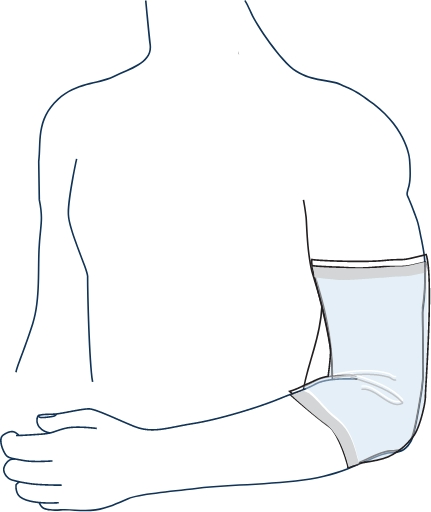
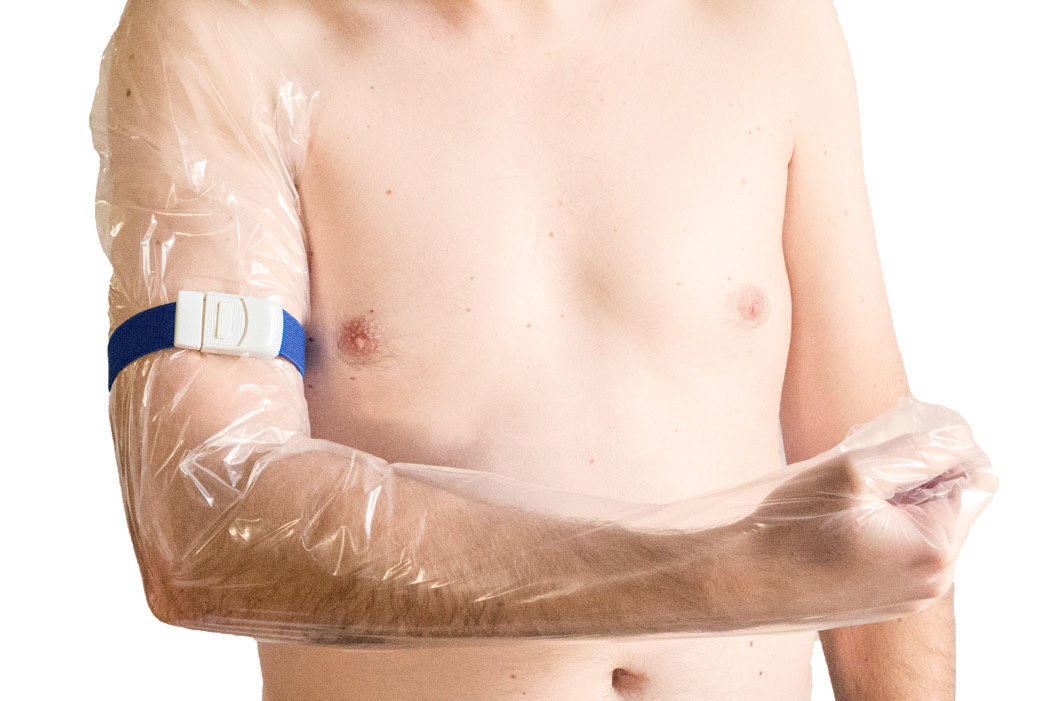
For a whole arm, the HydroSeal Sleeve replaces the bag-and-rubber-band approach. It slides over the arm, hand included, and closes at the top with a push-button buckle strap you can adjust to a snug fit. It fits adults and children, works over a cast, and puts no adhesive on your skin. The HydroSeal Boot does the same job for a foot or leg.
Plastic wrap vs. a shower barrier
| Plastic wrap and tape | Purpose-made barrier | |
|---|---|---|
| How it seals | Layers of film held by tape | One adhesive border on dry skin, or a buckle strap |
| Seams and edges | Many | One continuous edge |
| When wet | Tape loosens | Made to be used in the shower |
| Movement | Slides and bunches | Stays in place; Flex film stretches |
| Can you see the dressing? | Hard to see | Clear film |
If you must improvise tonight
Sometimes the barrier hasn't arrived yet. The safest option in that case is to skip the shower and sponge bathe, keeping the washcloth well away from the dressing. You can wash your hair at the sink, leaning forward, with someone helping if possible. That avoids the risk entirely, and it is what many care teams recommend for the first day or two anyway.
Using any shower cover correctly
- Check with your care team that showering is allowed. Many surgeons want you to wait a set number of days after an operation.
- Never submerge the site. No baths, pools or hot tubs, with or without a cover.
- Keep skin under any adhesive free of lotion, and don't shave the area to help it stick.
- Keep the covered area out of the direct spray and keep showers short.
- Towel the cover dry before removing it, and peel adhesive slowly from a corner.
- Use a new adhesive barrier each time; they are single use and can't be repositioned.
- Stop using it if your skin becomes irritated. HydroSeal products are latex-free.
If the dressing underneath is damp when you take any cover off, call your care team to have it changed.
Frequently asked questions
Is press-and-seal wrap better than regular cling film?
It clings a bit better to itself, but it still doesn't bond to skin, and the edges still rely on tape. It has the same weak points.
Can I put plastic wrap over a HydroSeal barrier for extra protection?
There is no need, and wrap over the border can trap water against it. Size the barrier correctly and keep the area out of the direct spray.
Does a shower barrier make the site waterproof for swimming?
No. Barriers keep a dressing dry during showering or sponge bathing. They are not for submersion of any kind.