You stepped out of the shower, looked at your arm, and saw it: a cloudy patch under the clear film, or an edge that has curled up, or a dressing that is just plain damp. Maybe the plastic bag slipped. Maybe you got caught in the rain. Either way, your stomach dropped.
Take a breath. This happens to a lot of people with a PICC line, and it is fixable. The one thing you should not do is leave it and hope it dries out.
Quick answer: If your PICC dressing gets wet, damp underneath, or starts lifting at the edges, call your infusion or home health nurse today to have it changed. Don't leave it on, don't try to dry it with a hair dryer, and don't add tape over the top. Keep the arm dry and protected until it is replaced.
Why a wet dressing can't just dry out
It is tempting to think that if the dressing looks fine once it dries, it is fine. Unfortunately, that is not how it works. The clear dressing is sterile when it goes on, and it protects the point where the catheter enters your skin. Once moisture has got under it, two things have changed. The adhesive has loosened, so the seal is no longer reliable. And the space under the film, which should be dry and clean, has had water from your skin, the shower or the outside world sitting in it.
That is why care teams treat a wet or loose PICC dressing the same way: change it. A fresh dressing, put on by someone trained to do it, puts things back to where they should be.
What to do right now
- Get somewhere dry and look at the dressing. Is water visible under the film? Are any edges lifting? Is the gauze or securement device damp? Is anything leaking from the site?
- Pat the outside dry. Use a clean towel on the outside of the dressing and the skin around it. Don't rub, and don't lift any edges to dry underneath.
- Leave the dressing on. Don't peel it off yourself unless your team has trained you to change it. The dressing is still holding the line in place.
- Call your infusion team, home health agency, or the clinic that placed the line. Tell them the dressing got wet, when it happened, and whether the edges are lifting. Most teams will arrange a change the same day.
- Protect the arm until then. Keep it out of water, avoid sweating it up, and wear a loose sleeve. If the line is catching on things, tubular netting like ProNet can hold it in place without adding tape to the skin.
- Watch for warning signs. Check the site and your temperature, and use the list below.
What not to do
- Don't tape over the top. Taping a lifting edge traps moisture and hides the problem without fixing it.
- Don't use a hair dryer. Heat near the line and site is not a good idea, and it won't restore the seal.
- Don't remove the dressing and leave the site open while you wait.
- Don't wait for your next scheduled change if that is days away.
How did it get wet? The usual causes
Knowing the cause makes it far less likely to happen again. These are the patterns nurses see over and over.
The cover leaked at the edges
Plastic wrap, bags and tape rarely seal fully against skin, and water wicks in along the edge. This is the single most common cause. There is more on that in why plastic wrap fails as a shower cover.
The cover was too small
If the border sits right at the edge of the dressing, or on the dressing itself, it can't seal. The adhesive needs about an inch of clean, bare skin all the way around. The tubing and caps hanging below a PICC dressing are easy to forget.
Lotion, sweat or damp skin under the adhesive
Any adhesive struggles on skin that is moist or has cream on it. Skipping lotion on that arm on shower days helps.
Long, hot showers or direct spray
Steam softens adhesive over time, and a strong spray aimed at the arm will find any gap. A short shower with the arm angled away does a lot.
Sweat or activity
Exercise, hot weather, or a sweaty night can loosen a dressing from underneath without any shower involved. If that is your pattern, mention it to your team.
How to keep it from happening again
Use a cover made for the job, and size it to cover the dressing and tubing with room to spare.
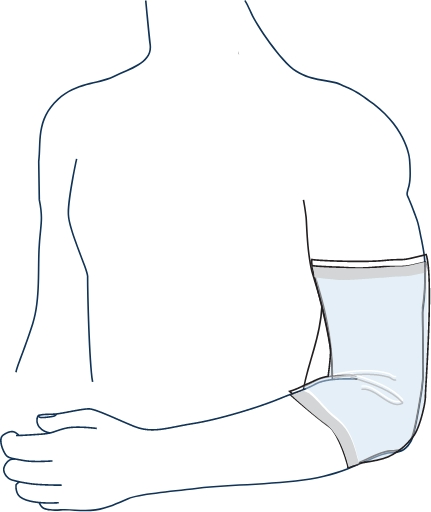
- The HydroSeal Flex is a 7" x 9" clear adhesive barrier shaped for the upper arm. Apply it with the 7" side horizontal and the 9" side vertical so it covers above and below the dressing without wrapping all the way around a slim arm. The film stretches as you move.
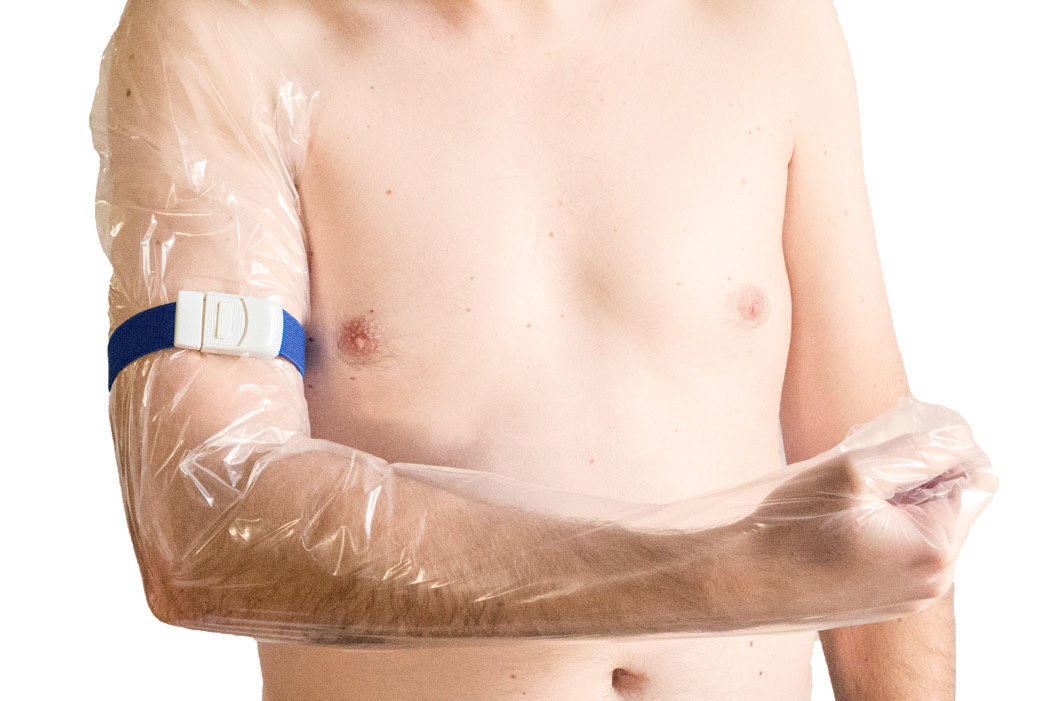
- The HydroSeal Sleeve covers the whole arm and fastens at the top with a push-button buckle strap. Nothing sticks to your skin, and the tubing is covered automatically. If an adhesive barrier is what leaked last time, a sleeve is worth trying.
Either way, put the cover over the intact dressing, keep the shower short, pat the cover dry before you take it off, and check the dressing afterward. Adhesive barriers are single use, so use a new one each time. Our full routine is in how to shower with a PICC line.
On days when you are worn out or the dressing is due for a change anyway, a sponge bath is a perfectly good choice.
Call your care team if...
- The dressing is wet, damp underneath, or lifting at any edge
- The site is red, swollen, warm or painful, or there is drainage
- You have a fever or chills
- The catheter looks like it has moved or there is more tubing outside than before
- Your arm, shoulder or neck on that side is swollen
- A cap is loose or missing, or the line is leaking. If the line is cracked or leaking, follow the emergency instructions your team gave you.
Frequently asked questions
Only a tiny corner got wet. Do I still need to call?
Yes. A small lifted corner is how a bigger leak starts, and only your nurse can tell whether the seal is still intact. A quick call costs you nothing.
It's the weekend. Can it wait until Monday?
Most infusion and home health services have an after-hours number for exactly this. Use it rather than leaving a wet dressing on for days.
Does a wet dressing mean I have an infection?
No. It means the dressing needs changing. Infection signs are things like redness, swelling, drainage, warmth or fever. If you notice any of those, tell your team.
Can I change the dressing myself?
Only if your team has trained you and given you supplies. PICC dressing changes are a sterile procedure, usually done by a nurse.