If you started hemodialysis with a catheter in your chest, you may have been told to keep it completely dry. For a lot of people that means weeks or months of washing at the sink, a towel draped over the shoulder, and missing the simple comfort of a real shower. It is one of the most common frustrations dialysis patients mention.
This guide explains why the rules are so strict, what to ask your dialysis unit, and how people who are cleared to shower keep the catheter dry.
Quick answer: Ask your dialysis unit first. Many units tell patients with a tunneled chest catheter not to shower at all. If your unit allows it, cover the intact dressing with a waterproof barrier, keep your back to the spray, keep it short, and never swim or take a bath. A healed fistula or graft in the arm is different and usually does not need covering.
Why a dialysis catheter has to stay dry
A tunneled hemodialysis catheter runs under the skin of your chest and into a large vein leading to your heart. It is used several times a week, carries a lot of blood flow, and often stays in place for weeks or months while a fistula or graft matures. A catheter infection can be serious and can mean losing the catheter, a hospital stay, or a bloodstream infection.
The dressing over the exit site, plus the caps on the ends of the lines, are what stand between that catheter and outside germs. Water can loosen the dressing and carry bacteria to the exit site. The CDC's guidelines for preventing catheter-related infections say not to submerge a catheter site in water, and that showering is acceptable if the catheter and its connections are protected with an impermeable cover.
Can you shower with a dialysis catheter?
It depends on your dialysis unit. Policies really do differ:
- Some units say no showering at all while a catheter is in. Sponge baths only.
- Some allow showering once the exit site has healed, with the catheter and dressing fully covered.
- Some have a specific cover or method they want you to use.
Ask your nurse at your next session. Useful questions:
- Am I allowed to shower with my catheter? If so, from when?
- What should I use to cover it?
- What do I do if the dressing gets wet between sessions? Should I come in early or call?
- Are there any days I should not shower, such as right after a dressing change?
If the answer is no, follow it. The sponge bathing guide has a routine that helps you feel clean without risking the catheter.
If your unit says yes: covering the catheter
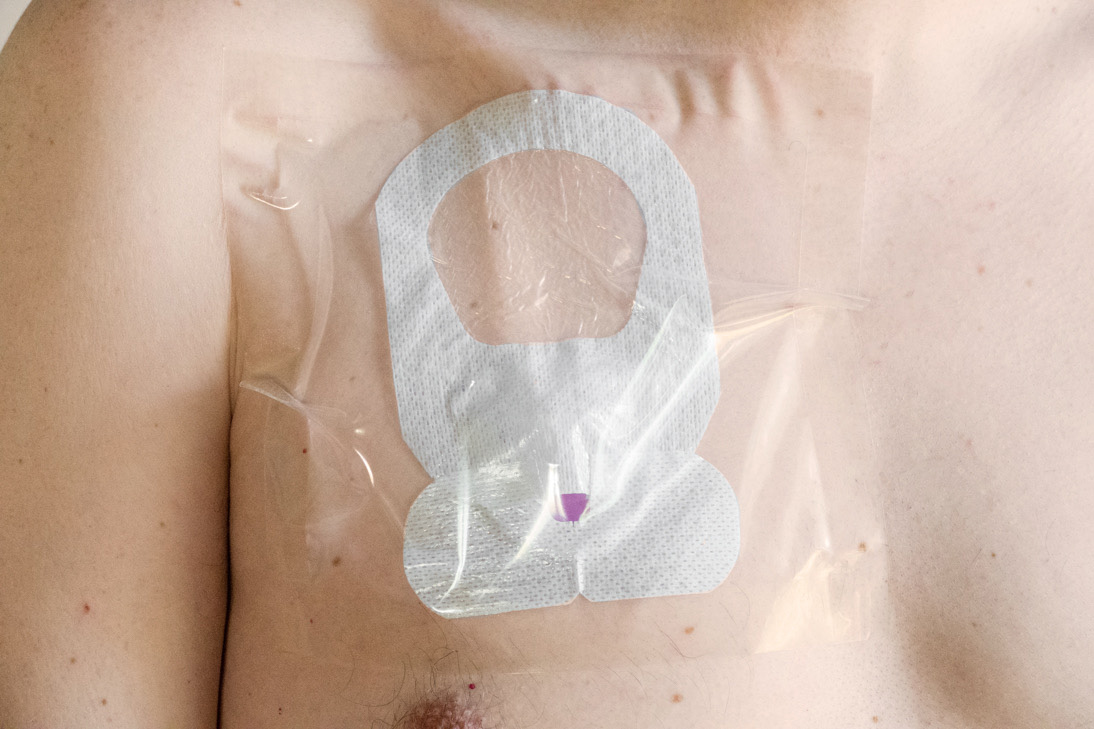
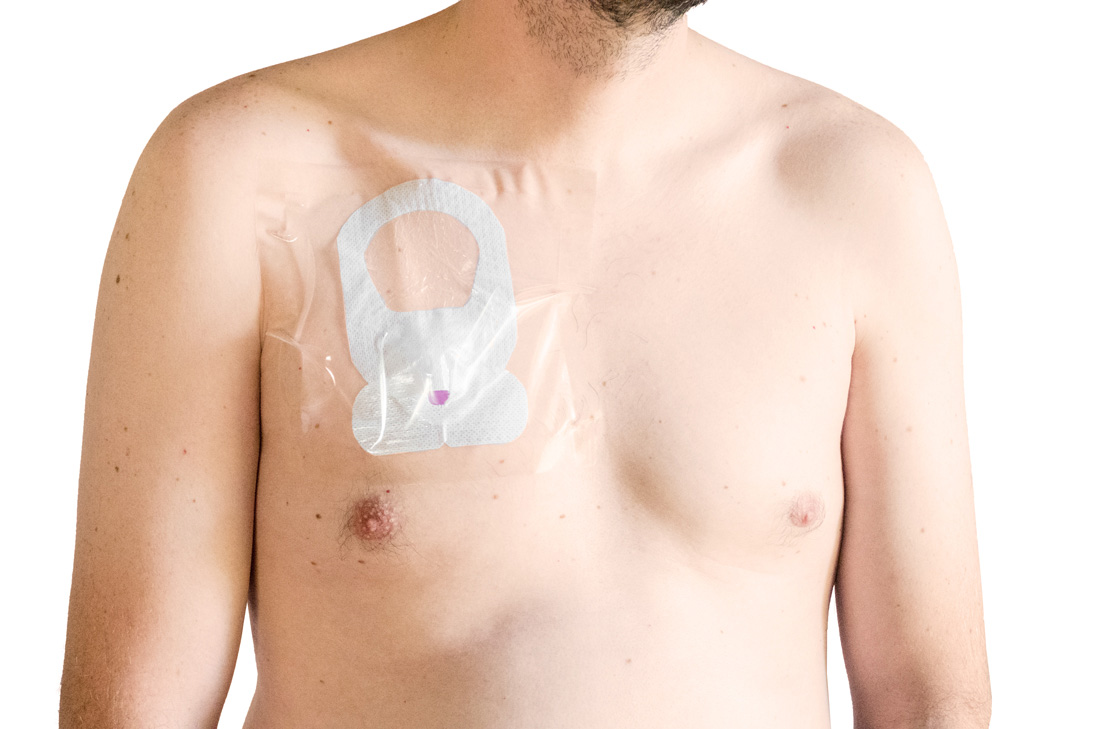
The HydroSeal Protective Barrier is a clear, impermeable film with an adhesive border that goes over your existing dressing. Dialysis catheters are one of the sites it is used for. It keeps the dressing dry during a shower or sponge bath, and because it is clear, you can see the site through it.
Size matters with a dialysis catheter because the external lines, clamps and caps also need to stay dry. Choose a barrier large enough to cover the dressing and the coiled lines, with the adhesive border on clean, dry skin all around. Many adults need one of the larger sizes, such as 9"x9" or 10"x12". The HydroSeal size guide walks through it.
Plastic wrap and tape are a common substitute, but they rarely seal fully on the curved chest and shoulder, and tape pulled off over and over can irritate skin near the exit site.
How to shower with a dialysis catheter, step by step
- Wash your hands and check that the dressing is intact, dry and sealed. If it is not, do not shower. Call your unit.
- Make sure the caps are on and clamps are closed, and gently coil the lines against your chest the way your nurse showed you.
- Keep the skin where the adhesive will go dry and free of lotion. Do not shave the area.
- Apply the barrier over the dressing. Peel the top liner and press the border onto skin about an inch above the dressing. Then peel the bottom liner and press it about an inch below. Finish with the two side tabs, smoothing the border flat as you go. Do not stick it onto the dressing, and do not lift and reposition it.
- Shower with your back to the spray. Use a handheld shower head if you have one so you can wash below the chest without aiming water at the barrier.
- Keep it short. Five to ten minutes is plenty.
- Towel the outside of the barrier dry first, then peel it off slowly from one corner, supporting the skin as you go.
- Check the dressing. If it is damp at all, contact your unit about changing it. Do not leave a wet dressing on until your next session.
Each barrier is single use. If your skin turns red or itchy where the adhesive was, stop using it and tell your nurse.
Call your dialysis unit right away if...
- The dressing is wet, loose or peeling at an edge.
- You have a fever or chills, including during or after dialysis.
- The exit site is red, swollen, tender or draining.
- A cap comes off, a clamp opens, or the catheter is cracked or leaking.
- The catheter looks like it has moved out farther than usual.
- If the catheter is bleeding heavily or you feel short of breath, call 911.
What about a fistula or graft?
An arteriovenous (AV) fistula or graft in your arm is different from a chest catheter. Nothing sits outside the skin, so once the surgical incision has healed and your surgeon or unit says so, most people shower normally and wash the arm with soap and water. Many units actually encourage washing the access arm before each session.
While a new fistula or graft incision is still healing, the rules are like any surgical wound. See our guide to keeping a surgical incision dry in the shower. After a session, keep the needle sites covered as your unit tells you until they have stopped bleeding. Ask your unit before you assume your access does not need protecting.
Peritoneal dialysis catheters
If you do peritoneal dialysis, your catheter is in your abdomen and the shower rules are set by your PD nurse. Many PD programs have a specific exit site care routine that includes showering, and some do not. Ask them, and follow their method rather than one meant for a hemodialysis catheter.
Frequently asked questions
Can I swim or use a hot tub with a dialysis catheter?
No. A tunneled catheter must never be submerged. That includes baths, pools, lakes, the ocean and hot tubs. No barrier is meant for submersion.
Can I wash my hair?
Yes, but lean forward or wash it at the sink so water runs away from your chest. A handheld shower head helps.
My unit changes my dressing at each session. Can I put the barrier on at home?
Yes, if your unit allows showering. The barrier goes over the intact dressing they applied, so you do not touch the dressing itself. Remove the barrier after every shower.
Will I ever be able to shower normally?
For most people the catheter is temporary. Once a fistula or graft is working and the catheter comes out, the site heals and normal showers usually resume. Your team will tell you when.