The first nights with a PICC line are often the hardest. You are afraid to roll over, afraid to pull the line, and you wake up checking that it is still there. A few changes to how you lie and how the line is secured make it much easier to sleep.
Quick answer: Sleep on your back or on the opposite side, support the line arm with a pillow, keep the external tubing covered and flat with tubular netting instead of extra tape, and check the dressing each morning.
Why nights are risky for a line
During the day you notice when the tubing tugs. Asleep, you do not. Rolling onto the arm, a sleeve twisting, a blanket catching a cap, or a hand reaching for an itch are the usual ways a PICC gets pulled out of position overnight. A line that moves even a little can stop working properly.
Positions that help
- On your back, with the line arm resting on a pillow at your side, slightly raised.
- On the opposite side, with a pillow in front of you to rest the line arm on, so it does not fall forward across your body.
- Avoid lying on the line arm for long periods. It presses on the dressing and the vein.
- A body pillow or rolled towel behind your back can stop you rolling onto the line side in your sleep.
Securing the line overnight
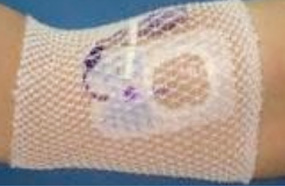
Most people try to fix a loose line with more tape. Tape on top of tape irritates the skin and can lift the dressing when it comes off. Tubular gauze netting is a better option. ProNet slides over the arm and holds the tubing and caps flat against the dressing, so there is nothing loose to catch. It does not constrict the arm and comes off easily in the morning.
Other things that help:
- A loose, soft long-sleeved top adds a second layer over the netting.
- Smooth cotton sheets catch less than textured fabrics.
- Keep pets off the bed while the line is in.
- If you use an overnight pump, place it where it cannot fall off the bed or be rolled on, with the tubing running up your arm, not across your body.
Night sweats and a damp dressing
Fever, infection and some treatments cause night sweats, and a sweaty arm can loosen the dressing just as water does. Keep the room cool, use a light blanket, and look at the dressing every morning. If it is damp or the edges are lifting, call your care team. Do not wait for the next scheduled change.
A morning check
- Look at the dressing: dry, sealed, edges flat.
- Look at the line: same length showing as yesterday, caps on, no kinks.
- Look at the arm: no new swelling, redness or pain.
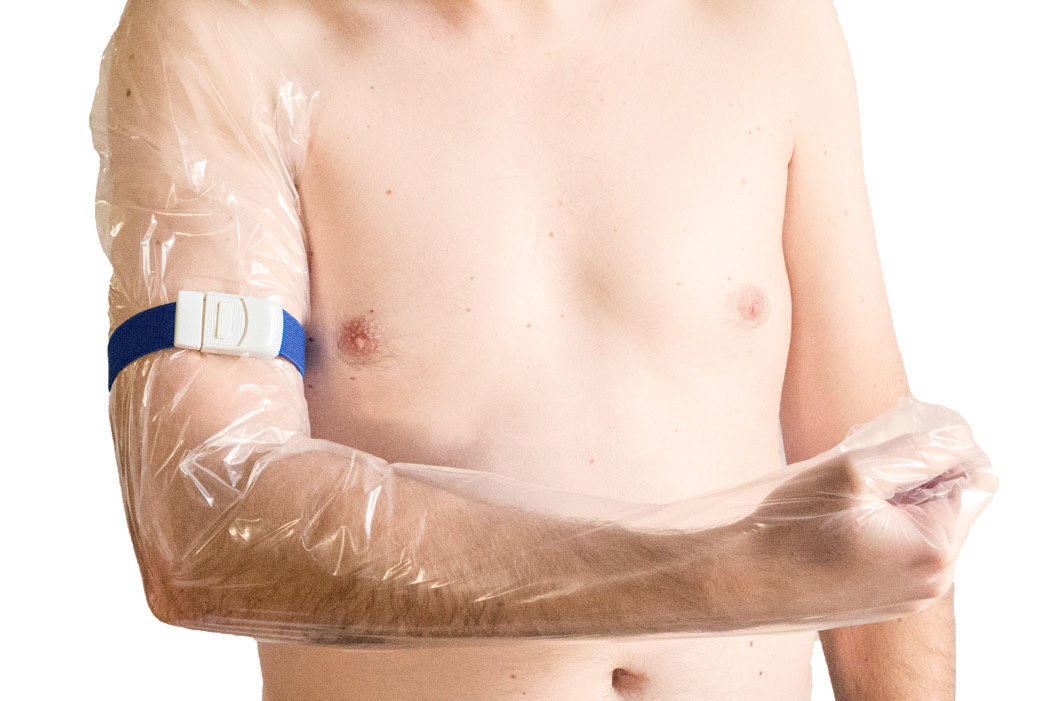
If everything looks normal, you are set for the day. When it is time to shower, take the netting off and use a waterproof cover. See how to shower with a PICC line.
Call your care team if...
- The line looks longer than before or has been pulled
- The dressing is wet, loose or lifting
- Your arm, hand or neck on that side is swollen
- The site is red, warm, painful or leaking
- You have a fever or chills
Frequently asked questions
Can I sleep on the side with the PICC?
It is best to avoid it, at least for long stretches. Pressure on the arm can irritate the vein and push on the dressing.
Should I wear the netting all night?
Many people do. Netting such as ProNet is designed not to constrict, so it is comfortable to wear for long periods. If it ever leaves marks or feels tight, try a larger size.
Is it normal to feel the line at night?
A little awareness of the line is normal. Pain, burning or swelling along the arm is not, and needs a call to your team.