After a hip replacement, your first shower at home is a bigger event than it should be. You need to keep the incision dressing dry if your surgeon has asked you to, follow your hip precautions, and avoid a fall on a wet floor, all at the same time.
Quick answer: Follow your surgeon's instructions on when you can shower. Many people use a waterproof dressing from the hospital. If yours is not waterproof, or you have been told to keep it dry, cover it with a large waterproof barrier, sit on a shower chair, and use a handheld shower head. No baths, hot tubs or pools until your surgeon says the incision has healed.
When can you shower?
It depends on your surgeon and the dressing. Many patients go home with a waterproof dressing and are told they can shower within a few days. Others have a dressing that must be kept dry until it is changed or the incision is checked. Read your discharge papers or ask. Do not guess.
Soaking is a different matter. Baths, hot tubs and pools are usually off-limits for several weeks, until the incision has fully closed and your surgeon has cleared you.
Covering a hip incision
A hip incision is usually several inches long, on the side or back of the hip, or at the front for an anterior approach. The area is curved and moves when you sit, so a cover needs plenty of room past the dressing on every side.
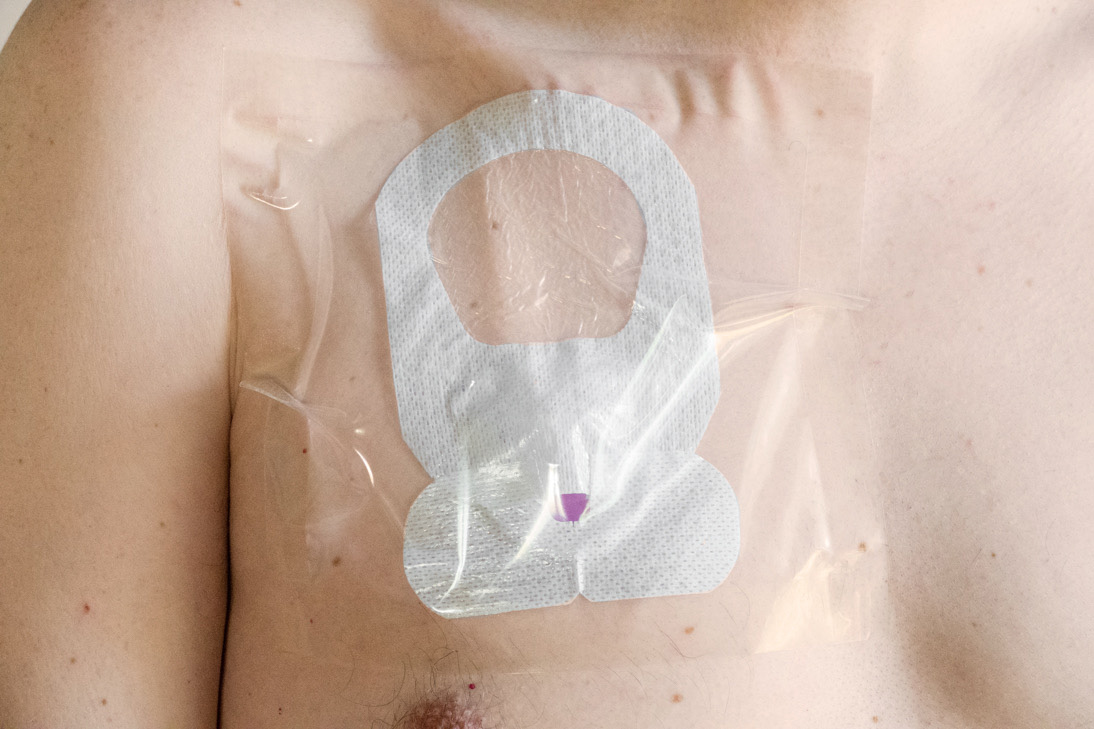
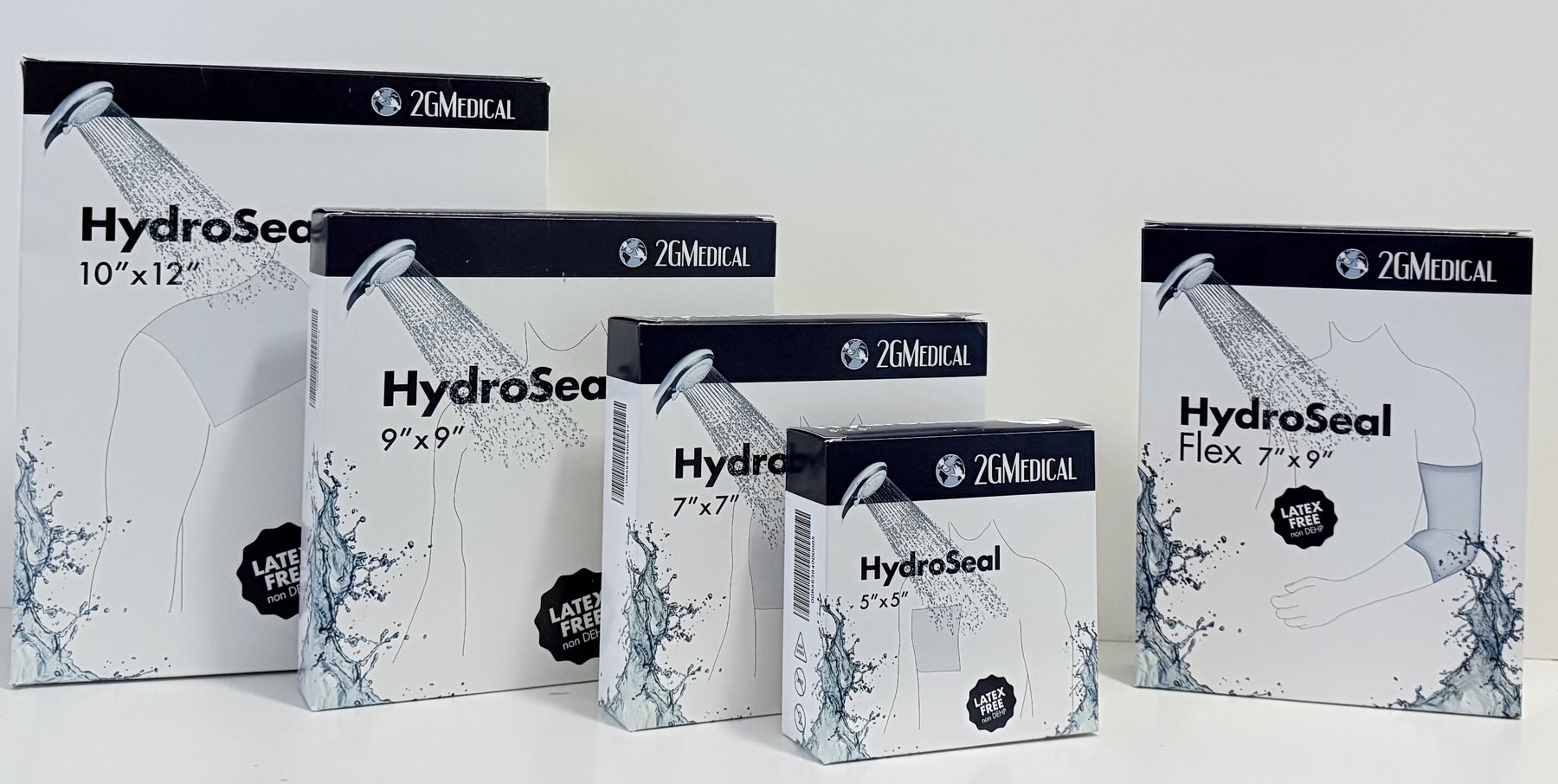
- 10" x 12" HydroSeal covers most hip dressings in one piece. Place it with the longer side along the incision.
- Apply it while standing, before you sit on the shower chair, so the skin is not creased. Ask your helper to place it if you cannot see or reach the area. Twisting to reach it may break your hip precautions.
- Press the border down all the way around, especially the lower edge where water runs off.
Setting up the bathroom
- A shower chair or tub transfer bench, at a height that keeps your hip above your knee if you have posterior precautions.
- A grab bar installed in the wall. Towel racks and soap dishes are not grab bars.
- A handheld shower head, so you can direct water away from the barrier.
- A long-handled sponge for your lower legs and feet, so you do not bend past your limits.
- Non-slip mats inside and outside the shower.
- Someone nearby for the first few showers.
Showering after hip replacement, step by step
- Check that the dressing is intact and dry. If it is wet or lifting, call your surgeon's office before you shower.
- Apply the barrier with the skin clean, dry and free of lotion.
- Use your walker to get to the shower, and sit down the way your physical therapist taught you.
- Keep the spray on your upper body and away from the barrier. Wash your legs with the long-handled sponge.
- Keep it short. Five to ten minutes is enough.
- Pat the barrier and the skin around it dry while seated, then peel the barrier slowly from one corner.
- Check the dressing. If it is damp underneath, call your surgeon's office.
Call your surgeon if...
- The dressing gets wet or comes off
- The incision is red, swollen, warm or leaking
- You have a fever or chills
- Pain suddenly gets worse, or the leg looks shorter or turned
- Your calf is swollen, red or painful
Frequently asked questions
How long after hip replacement can I take a bath?
Usually not for several weeks. Your surgeon will tell you when the incision has healed enough to soak. A barrier does not make soaking safe.
My dressing is already waterproof. Do I need a cover?
Often not, if your surgeon says the dressing can get wet in the shower. A cover is for dressings that must stay dry, or as an extra layer if your team recommends one.
Can I stand in the shower?
Ask your physical therapist. Most people are safer sitting for the first weeks.