Foot and ankle surgery, whether a bunion correction, an ankle fracture repair or an Achilles repair, usually means weeks without putting weight on the foot and a dressing, splint or cast that has to stay dry. Showering becomes a balancing act, in every sense.
Quick answer: Sit down to shower, keep the operated foot dry inside a full-leg waterproof cover, use a handheld shower head, and never stand on the foot unless your surgeon has cleared you. No baths, hot tubs or pools until the incision has healed.
The two risks: water and falls
A wet dressing or splint against a fresh incision softens the skin and raises the risk of infection. A wet cast may need to be replaced. But the bigger danger in the bathroom is a fall. Hopping on one wet foot, catching a crutch on the shower rim, or putting weight on the operated foot to catch yourself can undo the surgery.
Plan for both before your first shower, ideally before the surgery itself.
Setting up the bathroom
- A tub transfer bench or shower chair. A transfer bench straddles the tub edge so you can sit outside and slide in without stepping over.
- A handheld shower head so you can wash while seated and keep water away from the leg.
- Grab bars where you sit down and stand up.
- Non-slip mats inside and out.
- A stool or second chair outside the shower to rest the operated leg on while you dry off.
- Someone at home for the first few showers.
Covering the foot and leg
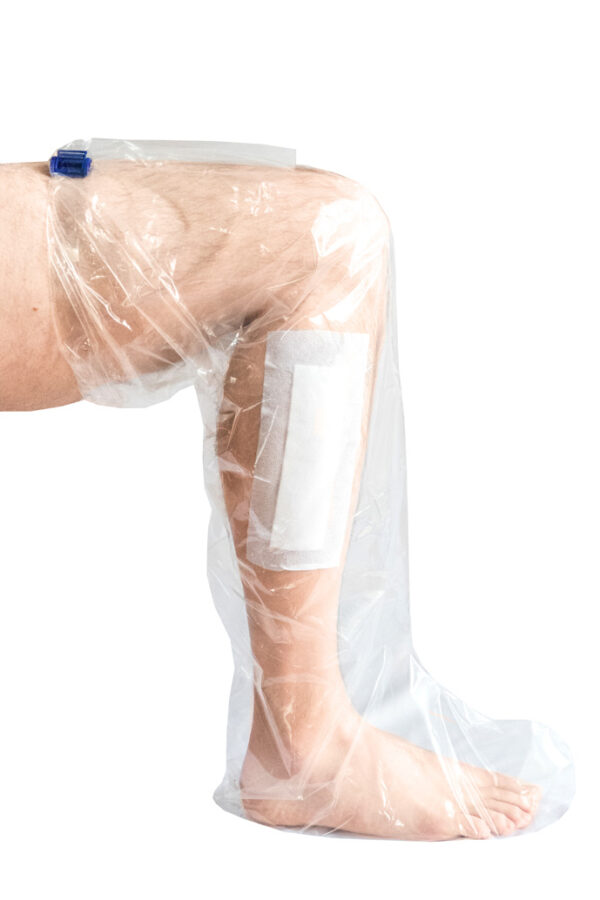
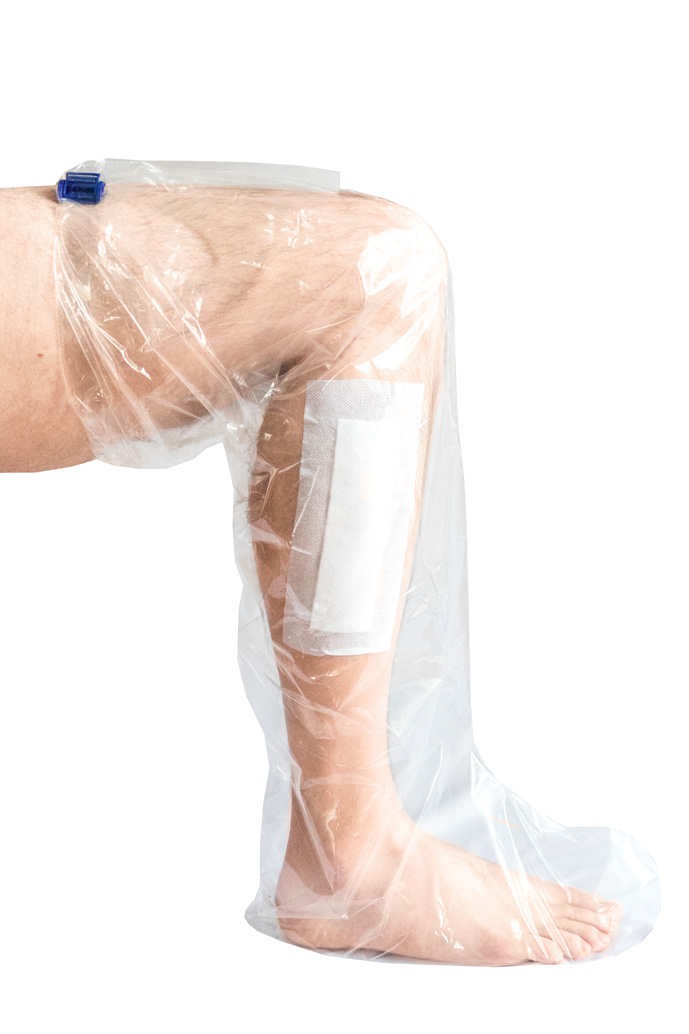
The HydroSeal Boot covers the whole foot and leg and fastens at the top with a push-button buckle strap. It fits over post-op dressings, splints and casts, and the film is textured with safety in mind. Put it on while sitting, before you move into the shower.
Even with a cover, keep the leg out of the spray as much as you can. Some people rest the heel on the edge of the tub or a second stool, outside the curtain, while they wash.
Showering after foot surgery, step by step
- Sit on the bench or chair outside the shower and check that the dressing is dry and intact.
- Pull the Boot on over the foot and up the leg, then fasten the strap above the top of the dressing or cast.
- Slide across into the shower without putting weight on the operated foot.
- Wash seated with the handheld shower head, keeping the spray on your upper body.
- Keep it short.
- Pat the Boot dry, slide back out, and rest the leg on the stool.
- Unfasten the strap and take the Boot off while sitting. Check the dressing.
- Raise the foot again afterwards, as your surgeon advised.
Call your surgeon's office if...
- The dressing, splint or cast gets wet
- Your toes are numb, cold, pale or blue
- Pain or swelling is getting worse
- You see redness or drainage beyond the dressing, or smell an odor from the cast
- Your calf is swollen, red or painful, or you are short of breath
Frequently asked questions
When can I get my foot wet after bunion surgery?
Usually after the stitches come out and your surgeon confirms the incision has closed, often around two weeks. Ask for your timeline.
Can I use a knee scooter in the bathroom?
Some people do, but scooters are unstable on wet floors. Sit down before you get near the water.
Is the Boot single use?
Yes. Use a new one for each shower.