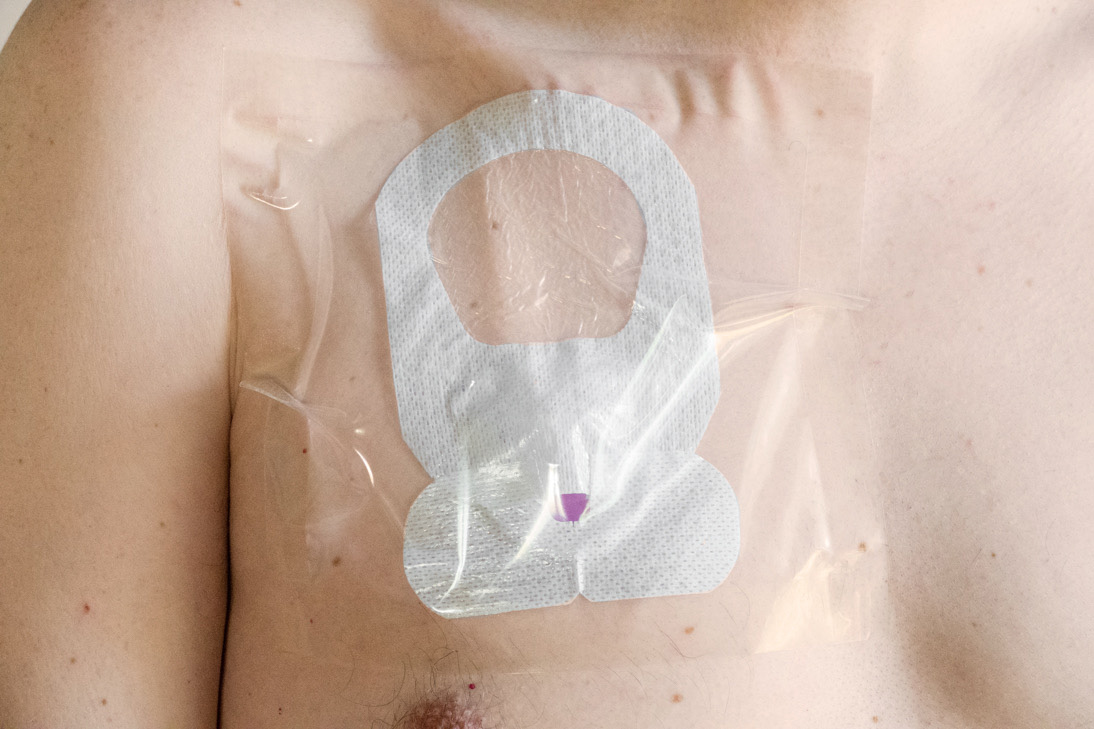
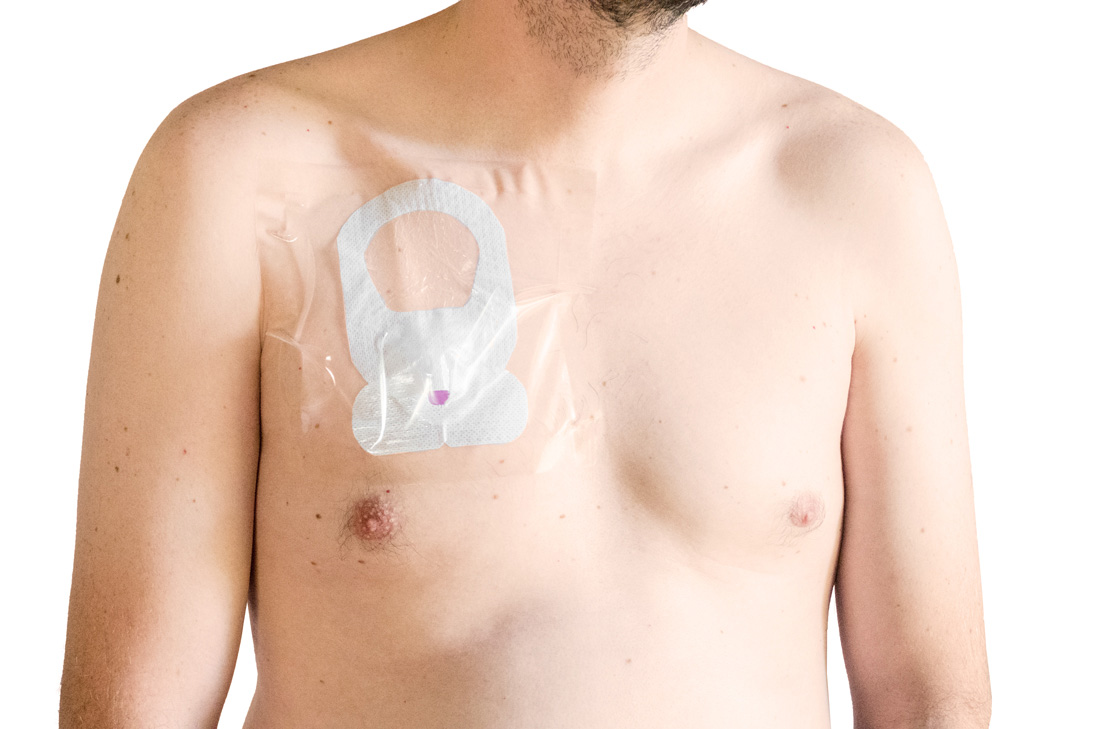
Going home with a new pacemaker or implantable defibrillator usually comes with two instructions that make showering tricky: keep the incision dry for a while, and do not raise your arm on that side above your shoulder. Here is how to wash without breaking either rule.
Quick answer: Follow your cardiology team's instructions on when you can shower. Until the incision can get wet, cover the dressing with a waterproof barrier, keep the spray off your chest, and wash your hair without lifting the implant-side arm. No baths, hot tubs or swimming until your team clears you.
What the instructions usually look like
A pacemaker or defibrillator sits in a small pocket under the skin below the collarbone, with an incision a few inches long. Leads run from the device into the heart. In the first weeks the leads are settling into place, which is why many teams ask you to limit how far you raise that arm.
Shower rules vary. Some teams use a waterproof dressing and allow showers within a day or two. Others want the incision kept dry for about a week, or until it is checked. Follow the instructions you were given. If they are not clear, call and ask.
Covering the incision
A HydroSeal barrier seals over the dressing so water cannot reach it.
- 7" x 7" covers most pacemaker dressings with room to spare.
- 9" x 9" suits a larger dressing or a defibrillator pocket.
- The barrier should reach at least an inch past the dressing on every side. Smooth it on with the other hand so you do not have to lift the implant-side arm.
- Make sure the skin around the dressing is clean and dry, with no lotion.
Showering after a pacemaker implant, step by step
- Check the dressing. If it is wet or lifting, call your device clinic before showering.
- Apply the barrier using your other hand, top tab first, then bottom, then sides.
- Turn your back to the shower head and let water run down your back. A handheld shower head makes it easier to keep the spray off your chest.
- Keep the implant-side elbow low and close to your body. Wash with the other hand.
- Keep it short, and avoid very hot water. Feeling lightheaded in a hot shower is common after any heart procedure.
- Pat the barrier dry, then peel it off slowly from a top corner.
- Check that the dressing is still dry.
Washing your hair
Hair washing is where most people break the arm restriction. Wash your hair at the sink with someone's help, use the other hand only, or lean forward slightly and let a handheld shower head do the work. Do not reach up with the implant-side arm until your team says you can.
Call your device clinic or cardiologist if...
- The dressing gets wet or comes loose
- The incision is red, swollen, warm, leaking or opening
- The pocket is swelling or tense
- You have a fever or chills
- You feel dizzy, faint, short of breath, or have hiccups that will not stop
For chest pain or fainting, call emergency services.
Frequently asked questions
When can I shower after a pacemaker?
It depends on your team and your dressing, from a day or two to about a week. Ask before your first shower.
Can water damage the pacemaker?
The device is sealed inside your body, so showering does not harm it. Keeping the incision dry is about healing and infection, not the device.
When can I swim or soak?
Only once the incision has fully healed and your team has cleared you. A barrier does not make soaking safe.