A midline catheter often gets described as "like a PICC, but shorter." That is a fair summary, and it means the same rule applies when you shower: the dressing and the line have to stay dry.
Many people with a midline are told it is "just a peripheral line" and assume it needs less care than a PICC. At shower time it needs the same care, because it sits in the same upper-arm veins under the same kind of dressing.
Quick answer: You can usually shower with a midline once your care team says it is OK. Cover the dressing, the tubing and the caps with a waterproof cover that seals to dry skin, keep the arm out of the direct spray, and keep it short. Never submerge the arm: no baths, pools or hot tubs.
What a midline is, and how it differs from a PICC
A midline is a thin catheter placed in a vein in the upper arm, usually a little above the elbow. It is a few inches long, so its tip stays in the arm. A PICC is much longer and its tip sits in a large vein near the heart.
Midlines are commonly used for IV antibiotics and fluids over days to a few weeks. From the outside, the two look almost identical: a clear dressing on the upper arm, with a short length of tubing and a cap or two hanging below it.
That is why the shower routine is the same. Water loosens the dressing's adhesive and can carry whatever is on your skin toward the insertion site. Either way, a wet dressing has to be changed.
What to cover with
Your cover needs to reach past the dressing on every side and cover the tubing and caps too. Two options suit an upper-arm line:
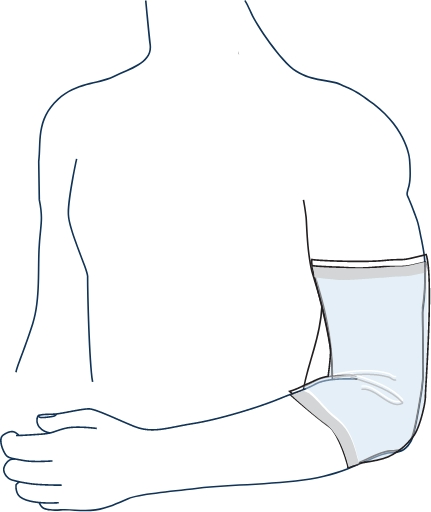
- The HydroSeal Flex. A 7" x 9" clear barrier made for the upper arm. The 7" width covers the dressing without wrapping all the way around a slim arm and sticking to itself, and the film stretches as you move.
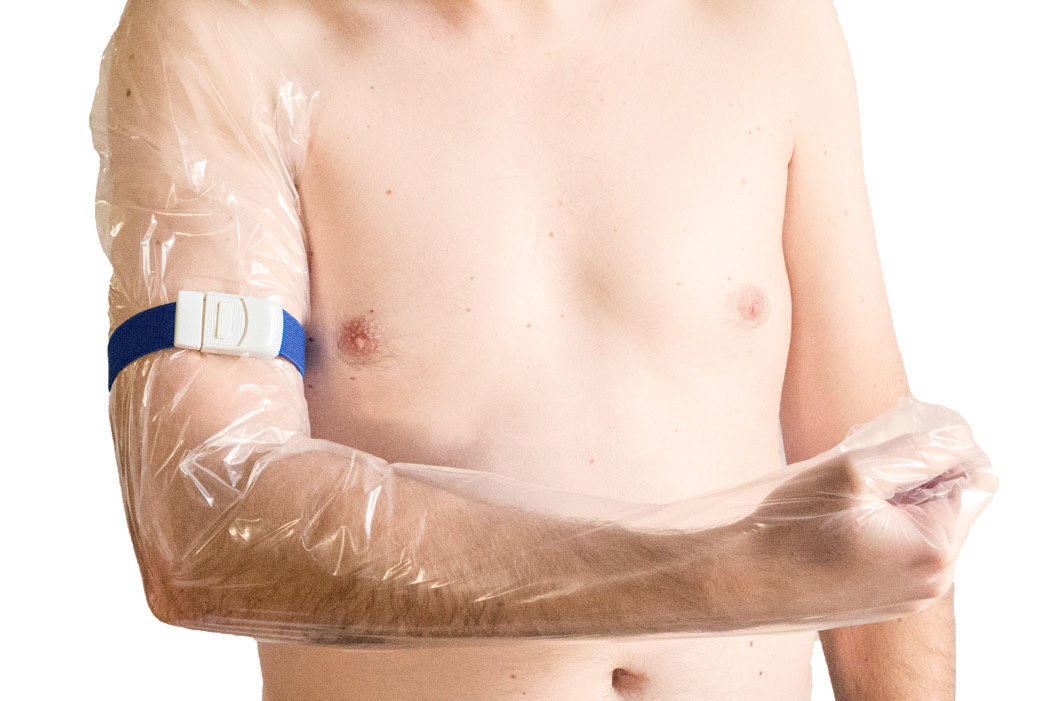
- The HydroSeal Sleeve. A full-arm cover that fastens above the dressing with a buckle strap. Nothing sticks to your skin, and it covers the hand, tubing and caps in one piece.
Showering with a midline, step by step
- Check with your team first, especially in the first day or two after placement.
- Look at the dressing. If it is lifting, damp or bloody, do not shower. Call to have it changed.
- Make sure the skin around the dressing is clean, dry and free of lotion, so an adhesive cover can seal.
- Coil the tubing and caps flat against the dressing so they end up under the cover, not hanging below it.
- Apply the cover. For the Flex, put the 7" side across the arm and the 9" side along it. Press the top tab down about an inch above the dressing, then the bottom, then the sides, and run your fingers around the whole border. For the Sleeve, slide it on and snug the strap above the dressing.
- Shower with the arm angled away from the spray. A handheld shower head makes this much easier. Five to ten minutes is plenty.
- Pat the cover dry before you take it off, then peel the Flex slowly from a corner or unbuckle the Sleeve.
- Check the dressing. Dry and sealed means you are done. Any moisture underneath means a call to your team.
Day to day with a midline
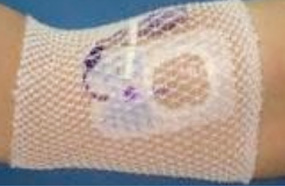
The tubing on a midline catches on sleeves and bedding just like a PICC's. Loose sleeves help. Tubular netting such as ProNet holds the line flat against the arm without more tape. Netting is not a shower product, so take it off before you shower. See how to keep a line from snagging for more.
Call your care team if...
- The dressing gets wet, loosens or lifts
- The arm is red, swollen, hard or painful along the vein
- The site leaks or you have a fever or chills
- The line hurts during an infusion or will not flush
- The line looks longer than before, or a cap comes off
Frequently asked questions
Is a midline easier to look after than a PICC?
The line itself is shorter, but the dressing care and shower routine are the same. Treat it with the same care.
Which cover is better for a midline, the Flex or the Sleeve?
Both work. The Flex is smaller and quick to apply. The Sleeve puts no adhesive on the skin and covers the tubing in one piece, which helps if your skin is sensitive.
Can I wash my hair?
Yes. Keep the midline arm lower than your head so water runs away from it, or wash your hair at the sink on days you do not need a full shower.